
International perspective/7 min read
Six things to clarify before funding a business across borders
Use the UK-to-Spain example to map entities, currencies and payment triggers, so a promising capital discussion does not overlook how the plan will be delivered.
Practical guide · GIC Capital · Updated 7 November 2026
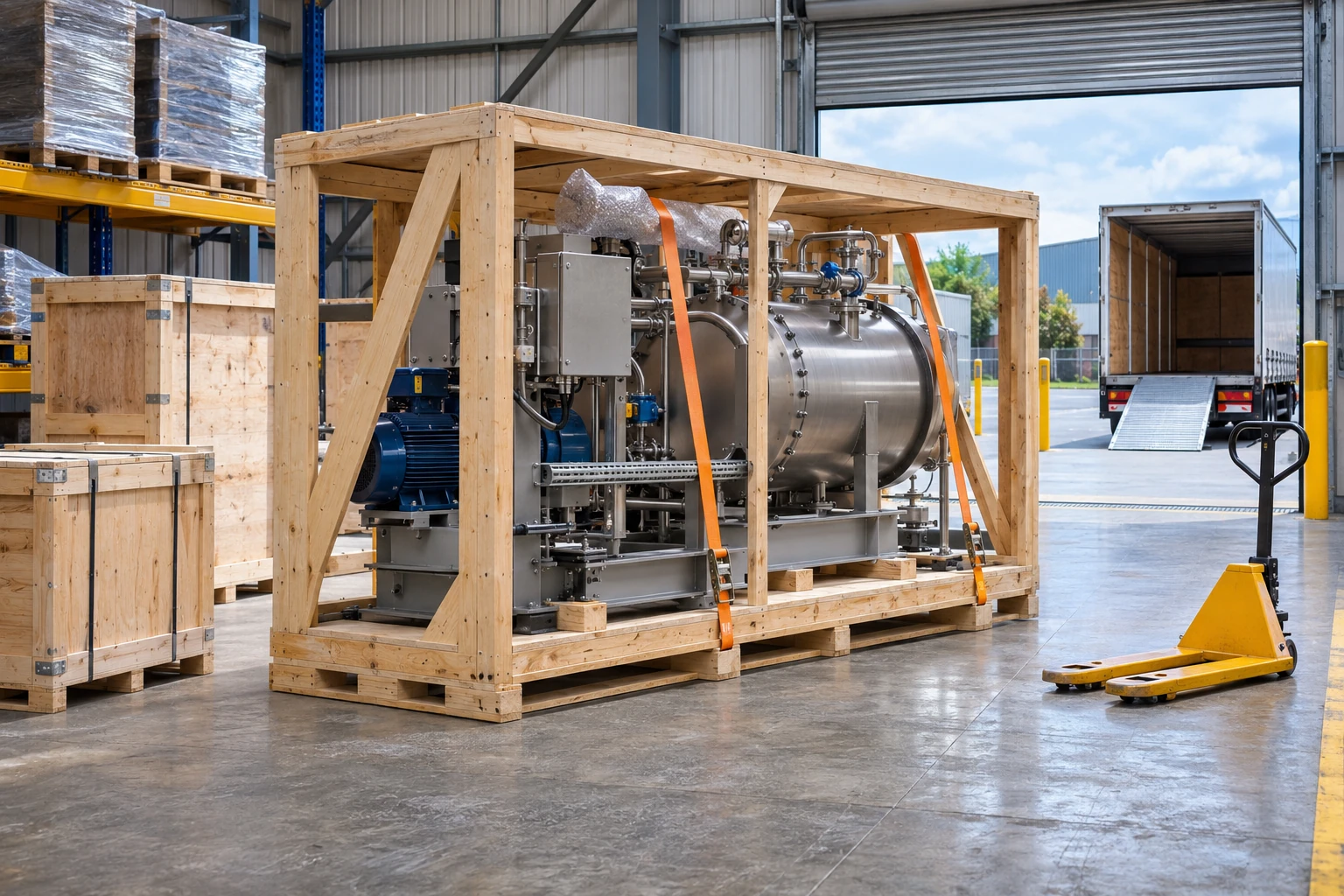
For businesses, project principals, investors and advisers preparing a specific international requirement or capital relationship. International reach becomes useful when the parties can explain what should happen, where, through which entity and with what source of repayment or return. Begin with the transaction, then test the commercial route. A conversation about financing exports is different from investing in a company, developing an overseas asset or sharing a capital-deployment mandate. Country labels alone do not establish suitability, usable access or authority to proceed.
First decide what kind of conversation you need
Write a single sentence describing the outcome. A UK manufacturer supplying a Spanish customer may need to bridge production and collection. A company seeking an investor needs a business and ownership proposition. An overseas project needs an asset, development plan and local execution case. A capital provider needs to describe its actual mandate and the relationship it wants to establish.
These situations require different evidence. Do not begin by sending an undifferentiated investment deck to every contact described as international. A shorter brief that identifies the right transaction can make an initial exchange much more useful and reduce unnecessary disclosure.
GIC Capital is a UK-based strategic capital advisory platform operating across the UK, Europe and selected African markets, helping businesses, investors and advisers navigate growth, capital and strategic opportunities. A particular enquiry still requires confirmation of its scope and usable route. Europe and Africa are not single commercial or legal markets.
Second map the entities and decision makers
Identify the operating company, contracting customer, asset owner, proposed borrower or investee and any guarantor or parent support actually offered. Separate registered country from trading locations and asset location. A group name may conceal several legal counterparties with different obligations.
Record who can approve the contract, investment and supporting documents. Distinguish an authorised representative from someone who can introduce a contact. A promising conversation does not create a mandate, and a public investment description does not prove that the person you know can arrange a transaction.
For an initial brief, use business identifiers and roles. Keep identity documents, sensitive shareholder information and other private evidence for an agreed appropriate channel when relevant. That preserves a useful first conversation without pretending that identity or authority has already been verified.
Third show the cash in the currency that matters
Separate contract currency, operating costs, proposed capital and repayment. An apparently attractive euro sale can create a sterling cash risk if production costs are fixed in pounds while the final conversion remains uncertain. A local-currency project with foreign-currency debt needs the same examination of mismatch.
Use a consistent rate convention, with date, source and whether it is a scenario assumption, an indicative reference or an agreed executable quotation. “The rate is 1.2” is incomplete. State, for example, one pound equals 1.20 euros. At that convention, divide euro proceeds by 1.20 to obtain pounds.
The following example uses invented rates for teaching. It is not a currency forecast or a recommendation to use a particular hedging product.
A UK manufacturer selling to Spain
A hypothetical English manufacturer agrees a €300,000 equipment sale to a Spanish business. It collects €60,000 at the start and €240,000 on final acceptance in week eight. Assume the deposit is converted at £1 = €1.20, producing £50,000. Sterling production and delivery costs total £200,000: £80,000 in week one, £70,000 in week four and £50,000 in week six. The business assigns £60,000 opening cash.
| Event | Base cash movement | Running cash |
|---|---|---|
| Opening | £60,000 available | £60,000 |
| Deposit converted at €1.20 per £1 | £50,000 receipt | £110,000 |
| Week 1 production | £80,000 payment | £30,000 |
| Week 4 production | £70,000 payment | −£40,000 |
| Week 6 delivery | £50,000 payment | −£90,000 |
| Week 8 final receipt at €1.20 per £1 | £200,000 receipt | £110,000 |
Total base sterling receipts are £250,000 and the simplified surplus is £50,000. The £110,000 closing cash includes the £60,000 opening contribution. VAT, duty, banking and capital costs, tax and other business movements are excluded and need transaction-specific treatment in a real plan.
If the pound strengthens so that the final conversion is £1 = €1.32, the same €240,000 produces approximately £181,818. Total sterling receipts become £231,818 and the simplified surplus £31,818. The deposit was already converted at the earlier assumed rate. Repricing all receipts would misstate that exposure.
If acceptance is also delayed and a further £10,000 falls due before collection, the lowest cash becomes minus £100,000 and final cash about £81,818. Currency, delay and extra cost are separate drivers. Showing their combined effect makes the decision clearer than changing a single exchange rate in an otherwise unchanged profit figure.
Fourth establish which event releases payment
Check whether the customer pays on dispatch, delivery, installation, acceptance or another agreed event. Identify evidence required and who can provide it. A production completion date is not necessarily the collection date. Unresolved acceptance criteria can become both a cash and a commercial dispute risk.
An earlier €60,000 milestone in week four, collected before that week’s payment and deducted from the final receipt, would bring in another £50,000 at the base rate. The final payment would fall to €180,000. With the unchanged base rate, the lowest cash improves from minus £90,000 to minus £40,000, while total receipts and closing cash remain unchanged. Different future rates would change that comparison and must be recalculated.
Assess whether staged deliveries, a smaller first order, agreed supplier timing or pricing in the operating currency is commercially workable. Each may affect competitiveness, customer acceptance or supplier reliability. Do not assume a financing structure is the only way to change the cash requirement.
Fifth identify the country specific execution work
The UK export process requires checks on destination rules, relevant documents and the receiving party’s ability to import. Great Britain and Northern Ireland have different processes in relevant cases. [1] HMRC guidance on movements between Great Britain and the EU was updated on 1 October 2026; the tax outcome depends on the actual movement and evidence. [2]
For this Spain example, identify who handles export and import declarations, delivery responsibilities, product requirements, installation obligations and the applicable tax assessment. Use the official market and product guidance as a starting point, then obtain appropriate local expertise for unresolved points. [3] A general country guide is not an approval of the contract or a substitute for transaction advice.
For an investment or property project, the corresponding work could concern ownership, consents, distributions, local delivery capability or the proposed security. State the particular country and transaction before seeking that input. Do not transplant an answer from one jurisdiction into another simply because both are in the same region.
Sixth define a useful relationship and next commitment
Separate three questions: does the transaction fit the stated mandate; is there a usable relationship with the relevant decision function; and can GIC add value within an agreed scope? A positive answer to one does not establish the others. Record evidence, unknowns and the next person or role able to resolve them.
Complete a one-page map with entity, country, asset or activity, contract currency, operating currency, source of repayment or return, timetable, decision authority and the unresolved question. In this example, the first question might be whether the acceptance milestone can be made more objective and partly paid earlier. That can be investigated before discussing a capital amount.
Over the next thirty days, reconcile the transaction map, validate the payment trigger, obtain landed-cost and local execution input and test currency and collection scenarios. Assign an owner to each open point and identify what must be confirmed before committing production cash.
If you would value another perspective, bring the map and the decision it needs to support into the relevant GIC conversation. State whether you are exploring a business requirement, project or capital relationship. A useful next step may be a clearer brief, a specific information request or an introduction whose scope has first been established.
APPLY THE METHOD
Bring the example to your decision
Read the completed UK-to-Spain example, then map your own transaction below. Record assumptions and unresolved questions explicitly; the form organises notes and does not calculate currency outcomes.
Download: Download the completed transaction map (text example)Build your own transaction map
Keep your notes while this website remains open and download a copy when useful. Reloading or closing the page clears them. No contact details are needed and these notes are not sent to GIC Capital.
Sources and scope
Evidence checked on 5 November 2026. Market context and guidance can change. All worked business examples are hypothetical.
- [1] GOV.UK, Export goods from the UK step by step, checked 5 November 2026. Operational guidance; follow the route applicable to the actual movement. External source opens in a new tab
- [2] HMRC, Goods moved between Great Britain and the EU from 1 January 2021, updated 1 October 2026, checked 5 November 2026. External source opens in a new tab
- [3] Department for Business and Trade, Exporting from the UK to Spain market guide, checked 5 November 2026. Page indicators have different data dates; no current tariff or tax rate is assumed here. External source opens in a new tab
Which entity, payment or local-delivery dependency still needs to be resolved?
Use the example to identify what you would need to check in your own business. If a material question remains, outline it for GIC. Your note stays in this tab until you review and choose to send an enquiry. Any engagement or introduction would be agreed separately.
The finder locates published material, not personalised advice.
General educational analysis. Figures are assumptions, not a valuation, personal recommendation, offer or eligibility assessment. Obtain appropriate specialist input before committing.