
Built environment/7 min read
Does the development still work if costs rise or sales and rental income arrive later?
Test higher costs and a later exit to see what happens to project profit and the cash you must commit before proceeding.
Practical guide · GIC Capital · Updated 7 November 2026
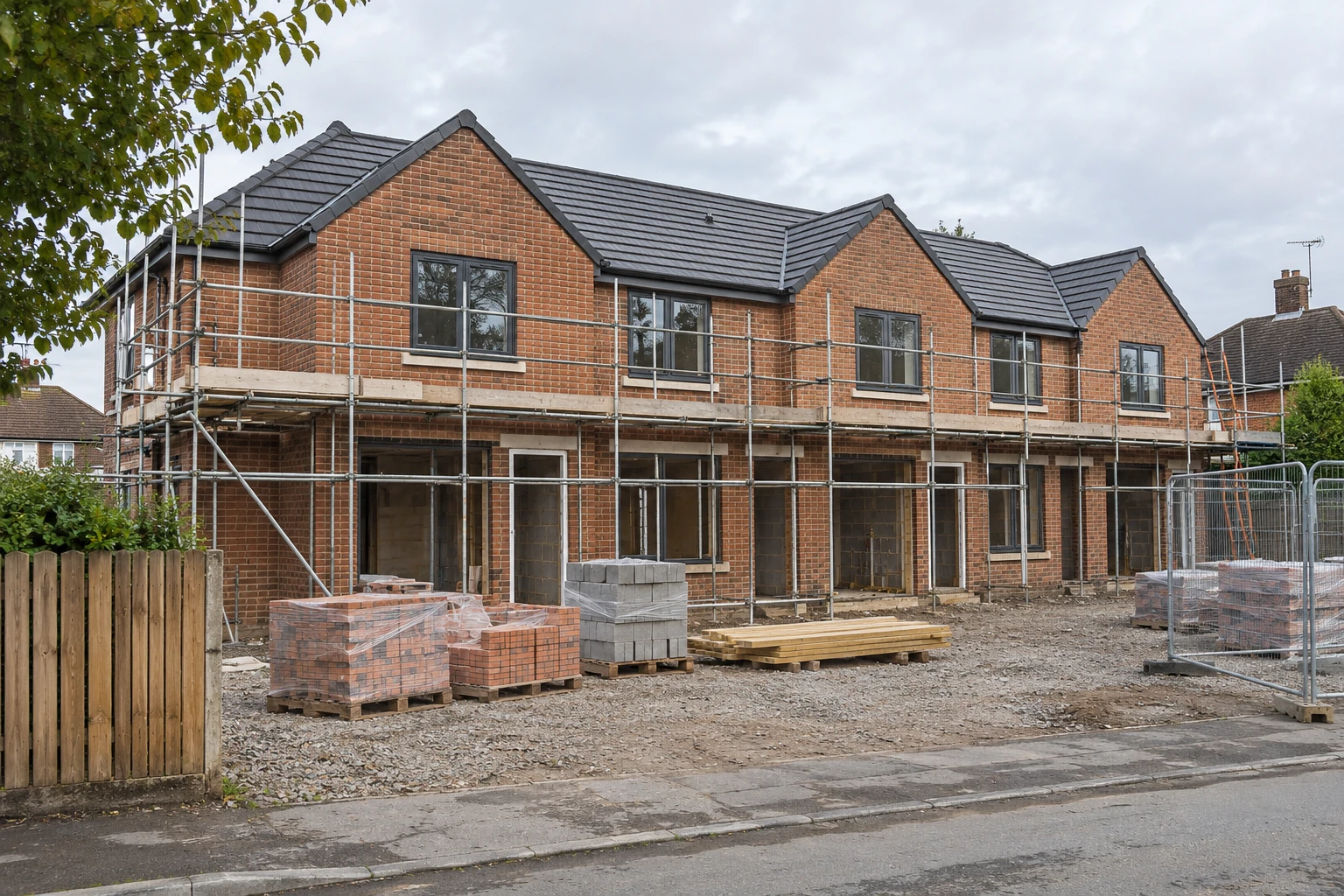
For developers, property principals and advisers comparing a site purchase, a further equity commitment or a change of exit. The question is whether the project remains worthwhile and deliverable when several assumptions change together. A useful appraisal separates value, profit and cash. It also distinguishes selling completed units from retaining an income-producing asset. A positive headline margin cannot establish that equity will be available when needed, that a refinance will complete or that a stabilised rental value can be realised immediately.
Start with the exit you are actually proposing
For a build-to-sell scheme, model the expected sale receipts and their dates. Deduct selling costs and all development expenditure on a consistent basis. For retained property, estimate sustainable net operating income and the market yield appropriate to that income. Record the letting and stabilisation period before assuming the income is achieved.
For a mixed outcome, separate sold units from retained assets. Do not count the same space in both gross sales and a capitalised income value. Allocate costs transparently if you want an income yield on the retained portion; an allocation chosen to improve the displayed result provides no economic reassurance.
RICS identifies development valuation as complex and sensitive to assumptions. Its development-property standard dates from 2019 and should be read with current valuation standards. This article uses a simplified decision model, not a valuation opinion. [1] The October 2026 Bank of England intelligence also reports developers seeking extensions where completed properties are difficult to sell. [2]
Build a cost definition you can reconcile
Include acquisition, applicable transaction costs, works, abnormal and infrastructure items, professional and statutory charges, contingency, letting or selling costs and finance. Establish which costs include irrecoverable tax. A tax allowance is not validated by choosing the project country in a calculator. Obtain transaction-specific advice where needed.
Keep committed and estimated costs distinct. A contractor quotation has a date, scope, exclusions and conditions. Compare it with drawings and programme assumptions. A cost estimate that omits an enabling package, connection charge or professional appointment may be precise to the pound and still materially incomplete.
Contingency and stress are different. A declared contingency is included in the base budget. A stress tests what happens if the specified cost base increases; state whether contingency rises with it. Do not assume the entire contingency is simultaneously spent and still available as cash protection.
A sale scheme with a useful headline and a weaker downside
Consider a hypothetical purchase for sale with £3 million gross sales, £600,000 land, £1.2 million works, £120,000 construction contingency, £180,000 professional and statutory costs and an £80,000 transaction and irrecoverable tax allowance. Selling costs are 2% of sales. An illustrative £1.5 million debt draw occurs at the start, with a 2% entry fee and 10% annual nominal interest rolled monthly. Completion is month twelve and all sales complete in month fifteen.
These debt terms are assumptions for teaching, not market quotes or an available facility. A real facility may have staged draws, retained interest, fees, covenants and conditions requiring a different cash schedule. With monthly rounding, the example’s rolled interest is approximately £198,843, total cost £2,468,843 and profit before tax £531,157. Profit on cost is approximately 21.51%; profit as a share of gross sales is 17.71%.
The same upfront-draw model requires about £710,000 peak sponsor cash before sale, even though eventual profit exceeds £531,000. With £500,000 cash equity available, approximately £210,000 is uncovered. The debt-funded opening surplus must remain available for project costs; spending it elsewhere changes the answer.
Test individual drivers and their combined effect
| Assumption | Base | Combined downside |
|---|---|---|
| Gross completed sales | £3,000,000 | £2,700,000 |
| Works before contingency | £1,200,000 | £1,320,000 |
| Works contingency | 10% | 10% of revised works |
| Construction completion | Month 12 | Month 15 |
| Sale and debt repayment | Month 15 | Month 18 |
| Monthly holding cost after construction | £0 in this simplified example | £0 in this simplified example |
The downside combines 10% lower sales, 10% higher works and three additional months. Finance must be recomputed for eighteen months. The approximate profit falls to £62,332 before tax, and peak sponsor cash rises to about £842,000. A zero holding allowance is deliberately visible: a real project may incur security, utilities, insurance, rates or other costs during the delay and should include them. The model does not establish that this is a sufficient downside.
Use individual stresses to identify the main driver, then combine plausible dependencies. A delayed completion can also move sales, finance, defects resolution and buyer decisions. Test sales absorption rather than treating every unit as a single simultaneous completion where that is unrealistic.
Retaining an asset requires a different explanation
Take a separate hypothetical retained development costing £2.4 million including its declared stabilisation and finance costs. Assume annual stabilised net operating income of £210,000 and an illustrative market capitalisation rate of 7.5%. Yield on cost is 8.75%; the development spread is 1.25 percentage points, or 125 basis points. Indicated income value is £2.8 million and value above cost is £400,000 before any omitted disposal costs or taxes.
These are assumptions, not comparable-market evidence. Net operating income should account consistently for vacancy, credit loss, management and property operating expenses before debt service and owner tax. Match the income definition to the market evidence. Gross rent divided by project cost answers a different question.
If cost increases 10% to £2.64 million, income falls 10% to £189,000 and the capitalisation rate rises to 8%, indicated value becomes £2,362,500. Yield on cost is about 7.16%, the spread is minus 84 basis points and value is £277,500 below cost. No universal positive spread makes every project attractive. It is an initial screen that omits the timing of equity contributions and distributions.
A refinance is cash only when it is available
An income valuation does not pay off construction debt. Model the actual illustrative refinance proceeds, existing debt settlement, fees and any sponsor cash needed at stabilisation. Keep the retained property value outside cash receipts. Where refinance proceeds are not evidenced, retain that uncertainty explicitly rather than substituting the appraised value.
For a mixed scheme, enter only gross sales of the sold part and income of the retained part. Reconcile combined value, actual exit cash, debt repayment and the remaining asset. A high combined appraisal surplus may coexist with an equity contribution needed to discharge debt. Assess the operating cash after retention separately, including future debt service and asset expenditure.
Work backwards from a chosen objective
For the retained example, management might choose a 150-basis-point spread for investigation. This is its assumption, not a market requirement. At £210,000 income and 7.5% capitalisation, maximum total cost for that screen is £2,333,333: income divided by 9%. If other costs were fixed at £1.9 million, the simple land residual would be £433,333.
In practice land price changes transaction taxes and may change debt, fees and interest. Recompute those dependencies before treating a residual as an offer. The Development Explorer therefore solves the land limit against its full declared cost model, with the entered tax allowance held fixed and explicitly identified for reassessment. A target for profit on cost can be used for a sale scheme; it should not be confused with a spread measured in basis points.
A practical evidence review before the next commitment
Prepare a register for acquisition terms, permissions, works scope, programme, professional costs, sale or rental comparables, operating costs and capital availability. For each, record source, date, confidence, decision owner and the next verification. Keep documents that evidence existing permission separate from intended applications.
Use the base/downside comparison to identify the next consequential question. It may be an abnormal cost survey, a letting assumption, the sales timetable or a facility condition. Obtain the evidence that could change the decision before spending effort polishing the least uncertain line. Consider renegotiating land, staging the scheme, changing scope or pausing where the revised case is weak.
Try the Development Explorer using your actual exit and evidence. If one assumption changes whether you would commit more equity, that is a useful starting point for a conversation with GIC Capital. Bring the assumption, its source and the decision it affects so the next step can be specific.
APPLY THE METHOD
Bring the example to your decision
The CSV records the completed teaching case and its assumptions; changing it does not recalculate the appraisal. Use the Development Explorer below to compare your own base and downside scenarios.
Download: Download the completed assumptions register (CSV, fixed values)Test your development assumptionsSources and scope
Evidence checked on 5 November 2026. Market context and guidance can change. All worked business examples are hypothetical.
- [1] RICS, Valuation of development property, published 1 October 2019. Methodological context, read with current applicable valuation standards. External source opens in a new tab
- [2] Bank of England, Agents summary of business conditions, 30 October 2026. Qualitative intelligence collected in the six weeks to early October, not a survey of every developer. External source opens in a new tab
- [3] Homes England, Financial viability for housing-led projects, 10 December 2021, applies to England. Explains basic residual appraisal and the treatment of timing in more complex projects. External source opens in a new tab
Does the downside case change how much cash you need or when to proceed?
Use the example to identify what you would need to check in your own business. If a material question remains, outline it for GIC. Your note stays in this tab until you review and choose to send an enquiry. Any engagement or introduction would be agreed separately.
The finder locates published material, not personalised advice.
General educational analysis. Figures are assumptions, not a valuation, personal recommendation, offer or eligibility assessment. Obtain appropriate specialist input before committing.