
Pubs & Bars/7 min read
Would refurbishing your pub improve profit enough to justify the cost?
Compare refurbishment with changes to the offer and day-to-day operation. Test the extra earnings against the cost, closure period and continuing commitments.
Perspective · GIC Capital · Published 7 November 2026
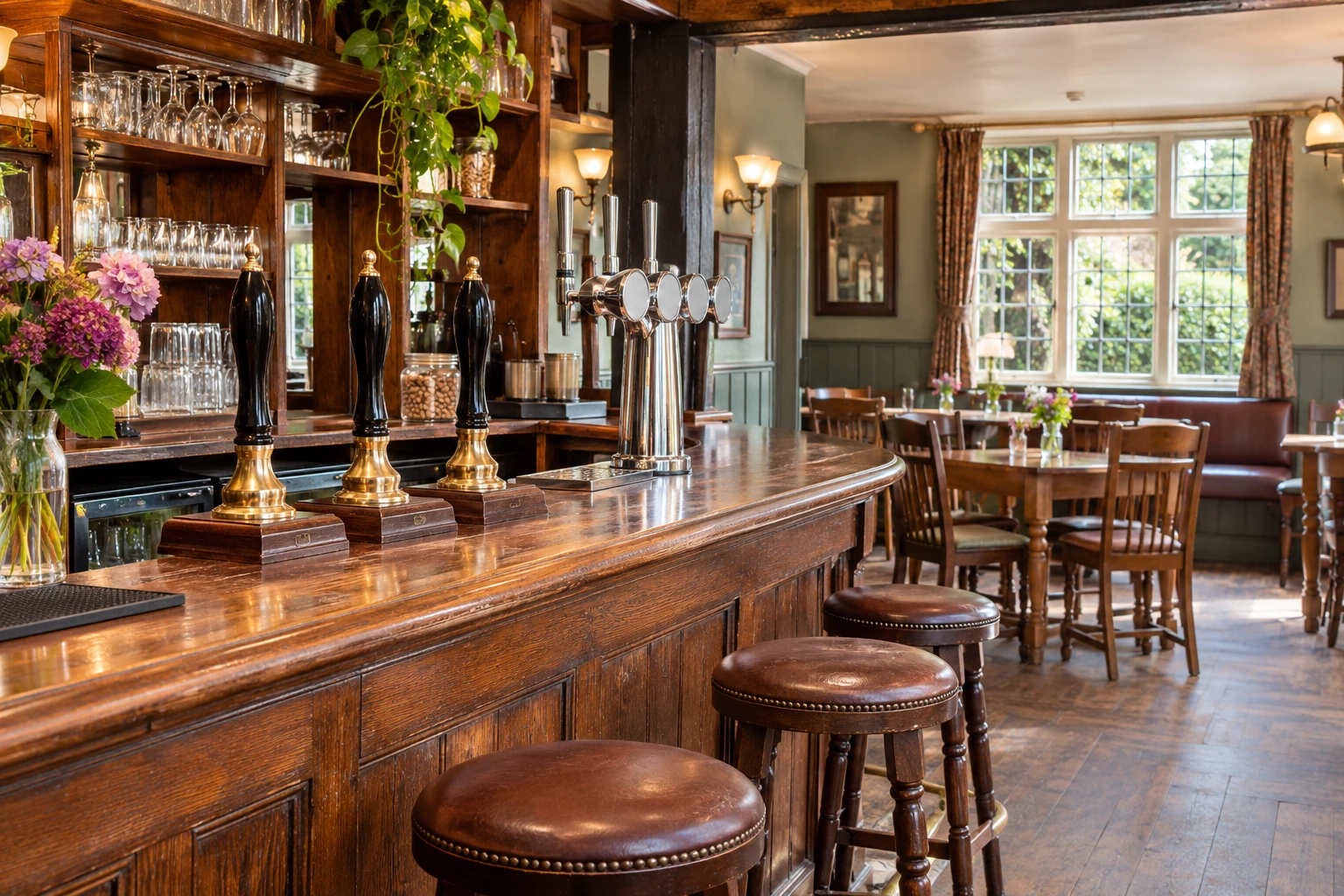
A pub refurbishment can refresh the customer experience without repairing the underlying economics. The better investment may be a targeted improvement, a different use of existing space or a change to service and trading patterns. This perspective tests a £45,000 refurbishment, separates contribution from takings and shows how closure costs and a chosen cash reserve alter affordability. The aim is a clearer decision about the pub you operate, rather than a generic case for spending more.
Name the trading problem before the design brief
A tired seating area, an unreliable kitchen and weak weekday demand require different responses. Begin by describing what customers are unable or unwilling to do in the present pub. Then ask which evidence supports that explanation. A design can look convincing while depending on an untested assumption that a different customer group will start visiting.
Review takings and contribution by daypart, with wet sales and food sales separated where the records allow. Add average transaction value, staffing, customer feedback, maintenance incidents and any genuinely lost bookings. Saturday crowding can coexist with unused capacity at other times. Increasing floor area does not by itself resolve the uneven pattern.
The Bank of England’s October 2026 business intelligence describes modest and uneven activity and price-sensitive demand. [1] That is context for testing assumptions, not evidence of the response to a particular pub’s refurbishment. The local catchment and existing customers still need to carry the case.
Distinguish maintenance, experience and repositioning
Essential repairs protect the ability to trade. A comfort improvement may support existing customers. A repositioning project attempts to change the offer or audience. Put these in separate parts of the brief so that necessary maintenance is not used to justify every optional element of a much larger scheme.
For each element, state a proposed mechanism. Would better seating make a particular area usable? Would a kitchen change support a food offer the current operation cannot deliver? Would improved service reduce lost orders? Attach an observation or a test to the mechanism. Avoid treating a new finish, more capacity and stronger demand as the same thing.
A staged brief can make the decision more reversible. It can also cost more overall or create repeated disruption. Record that trade-off. A cheaper first phase is useful only if it answers a material uncertainty or creates a worthwhile result in its own right.
Test the £45,000 refurbishment against contribution
A £45,000 refurbishment forecast to generate £1,250 additional monthly contribution yields £15,000 annually before disruption and financing, implying three years simple payback. If contribution is £500 monthly, payback becomes 7.5 years. Neither result establishes an investment recommendation.
| Hypothetical monthly additional contribution | Annual equivalent | £45,000 simple payback |
|---|---|---|
| £500 | £6,000 | 7.50 years |
| £1,250 | £15,000 | 3.00 years |
| £2,000 | £24,000 | 1.88 years |
The contribution assumption must be after the trading costs that change with the extra activity. If the calculation starts with additional takings, deduct the relevant product, staffing and other incremental costs first. Recurring costs not already included must be shown separately. The table omits financing, tax, time value, disruption and disposal value; its payback figures are a screening calculation, not returns promised by a refurbishment.
Do not count a displaced sale twice. If customers move from an existing room to a refurbished room, the spending may improve their experience without being new revenue for the pub. Evidence of retention can still matter, but it needs a different comparison from additional footfall.
Make interruption and the reserve visible
Consider a separate hypothetical cash-planning test. The pub has £70,000 of unrestricted cash and chooses a £20,000 operating reserve. The base budget includes a £45,000 project, a £4,500 contingency allowance and a £3,600 trading-interruption allowance. The downside assumes the project costs £50,000, the contingency has been used within that amount, and interruption costs £6,000.
| Cash-planning assumption | Base allowance | Downside |
|---|---|---|
| Project payments | £45,000 | £50,000 |
| Remaining contingency held | £4,500 | £0 |
| Trading-interruption allowance | £3,600 | £6,000 |
| Total project-related cash requirement | £53,100 | £56,000 |
| Cash plus reserve required | £73,100 | £76,000 |
| Gap against £70,000 available | £3,100 | £6,000 |
The contingency is a planning allowance, not an assertion that it will all be spent or an accounting expense. It is not added again after it has been absorbed by the downside project cost. The interruption allowance should represent lost net cash contribution and unavoidable extra cash costs, without also charging the same lost sales or costs elsewhere.
This test treats the project commitments as occurring before incremental receipts. A real cash plan needs actual payment dates and the remaining business movements. A gap against an owner-selected reserve is not automatically the amount to borrow; reducing scope, changing the timetable or waiting may be more useful.
Check whether the premises can support the idea
Before locking a contractor into a start date, identify the lease, landlord, insurer, permissions and operational constraints relevant to the proposed work. Record which have been checked, which need specialist advice and which could change scope or timing. Do not treat a drawing, supplier quotation or existing licence as confirmation that every proposed change is permitted.
A food-led repositioning needs a credible kitchen, supply, staffing and service plan as well as new décor. Outdoor works need a realistic assessment of usable trading days and the effect on neighbours and existing customers. An additional room needs a plan for supervision, service and cleaning. These are operating questions to resolve for the specific premises, not assumptions supplied by a general article.
Compare a targeted improvement with a bigger scheme
Set out at least three credible alternatives: repair and improve service; make a limited refurbishment; undertake the larger repositioning. Include a measured waiting option where safe and appropriate. Compare the customer problem addressed, costs, management effort, disruption, recurring obligations and evidence needed for each.
Choose a limited test when the uncertainty can be tested that way. A change in seating layout, a defined food-service trial or a bookable event format may reveal something useful before a larger commitment. Keep any temporary arrangement within the premises’ actual permissions and operating capability. A good result on one event does not establish a repeatable weekly contribution.
Build an evidence pack you can challenge
- Use a representative set of trading weeks, separating exceptional events from the normal pattern.
- Document the customer problem and the proposed reason the work would change it.
- Obtain an itemised scope, payment schedule and responsibility for exclusions and overruns.
- Calculate contribution and cash cases with lower demand, a longer closure and a slower ramp-up.
- Agree the first post-opening review date and the measures that would trigger a change in plan.
Keep the decision brief short enough to use. Its purpose is to make the consequential assumptions visible, rather than to accumulate attractive photographs and optimistic turnover estimates. Assign an owner to each unresolved item and distinguish a quote received from a cost or permission confirmed.
Where can a capital conversation add value?
A useful discussion starts with the commercial objective and the premises and trading evidence. It then asks whether the affordable scope and payment pattern leave a capital requirement. Compare any proposed repayment commitment with the pub’s existing obligations and downside trading, rather than with the most optimistic incremental contribution.
GIC Capital can help bring the objective, possible broad capital routes and information gaps into one strategic conversation. The decision may support a phased refurbishment, a smaller intervention or a reasoned delay. Contractor, premises, licensing, operational and financial assumptions remain for the business and its appropriate specialists to validate.
Sources and scope
Evidence checked on 7 November 2026. Market context and guidance can change. All worked business examples are hypothetical.
Could an operating change deliver the benefit before a full refurbishment?
Use the example to identify what you would need to check in your own business. If a material question remains, outline it for GIC. Your note stays in this tab until you review and choose to send an enquiry. Any engagement or introduction would be agreed separately.
The finder locates published material, not personalised advice.
General educational analysis. Figures are assumptions, not a valuation, personal recommendation, offer or eligibility assessment. Obtain appropriate specialist input before committing.