
Agriculture/9 min read
Farm machinery: buy, share or use a contractor?
Compare seasonal capacity, whole-life cost and cash flow before committing capital.
Perspective · GIC Capital · Published 7 November 2026
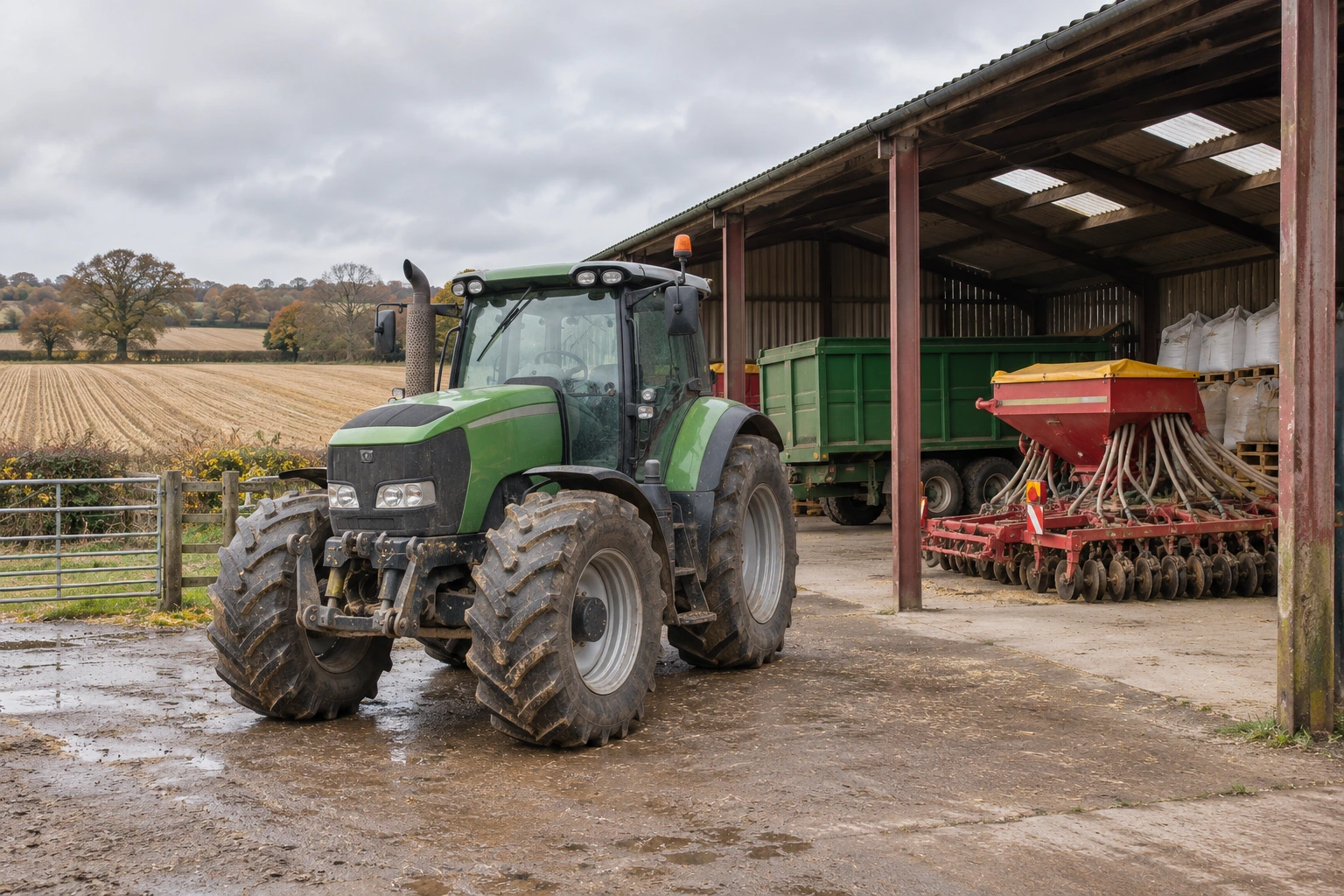
For farm owners and managers deciding whether to replace equipment, bring a contracted operation in-house or share capacity with another business. The useful comparison starts with the work and its timing: hectares or hours, the agronomic window, reliable operators and the consequences of delay. Ownership can improve control while adding commitments that persist through a weaker season. Contracting can preserve cash while introducing availability and service risks. Neither is automatically the more commercial choice. Build the comparison around the whole farm, including livestock, cropping, labour and the cash needed before the next sale.
Define the job before choosing the machine
Write down the operation, area, target work rate and dates in which it must be completed. A brochure capacity measured in ideal conditions is not a reliable farm work rate. Include travel between fields, filling, cleaning, maintenance, breakdown cover and operator availability. Record what happened in recent comparable seasons, then identify which circumstances would make those observations a poor guide to the next one.
Separate replacement from expansion. If an existing machine must be replaced to maintain an essential operation, compare credible replacement routes. If a larger machine is intended to support more land or contract work, show that additional work separately. An expression of interest from a neighbour is not the same as an agreed job, an achievable date or a dependable receipt.
Put the alternatives on a consistent basis
AHDB describes partial budgeting as a way to examine the effects of a change to part of a farm business. [1] For this decision, list the contractor cost that would disappear, the owned costs that would appear, and any genuine output change. Keep unchanged land rent and other shared expenditure outside the incremental comparison, while retaining them in the whole-farm plan. A positive machinery comparison does not prove that the farm as a whole makes enough.
Check the contractor quotation for fuel adjustments, mobilisation, minimum area, specialist attachments and cancellation terms. For ownership, include acquisition and installation, annual insurance and storage, servicing, wear, fuel, labour and a realistic disposal assumption. Sharing also requires decisions about scheduling, maintenance, damage, access, exit and responsibility when both businesses need the machine at once. Free family time is not an unlimited operating resource.
A hypothetical ownership comparison
Assume a machine costs £180,000 and is expected to sell for £60,000 after eight years. The farm requires 600 hectares of work annually. Contracting costs an illustrative £65 per hectare. Owned variable cash cost is £22.50 per hectare, including fuel, wear and paid operating labour, with a further £6,000 annual fixed cash allowance for insurance, storage and base servicing. These are teaching assumptions, exclusive of VAT; they are not machinery quotations or farm benchmarks.
| Annual comparison at 600 hectares | Contract | Own |
|---|---|---|
| Operating cash cost | £39,000 | £19,500 |
| Operating cash saving against contracting | — | £19,500 |
| Straight-line economic depreciation assumed | Not applicable | £15,000 |
| Economic cost before financing or opportunity cost | £39,000 | £34,500 |
| Annual advantage after assumed depreciation | — | £4,500 |
Owned operating cash cost is 600 × £22.50 plus £6,000. Depreciation is (£180,000 − £60,000) ÷ 8. The £19,500 annual cash saving is not the annual profit improvement; the illustrative profit advantage before financing is £4,500. Depreciation is not a separate payment into a replacement bank account. If management wants a cash reserve for replacement, it must actually retain cash.
Dividing the initial £180,000 purchase by the £19,500 saving gives a simple payback of about 9.23 years, ignoring disposal value, discounting, tax and financing. That exceeds the assumed eight-year holding period, but it does not by itself settle the decision: the expected disposal receipt also has value. Prepare a dated whole-life comparison, including disposal, and assess the opportunity cost of committing capital. Do not describe either shortcut as a full investment appraisal.
Find the utilisation and timing boundaries
At these assumptions, the annual advantage after depreciation is £42.50 per hectare less £21,000 of annual fixed cash cost and depreciation. It becomes zero at about 494.1 hectares. This is a calculated boundary for this example, not a recommended scale. It excludes financing and the opportunity cost of capital. A lower annual cash break-even would answer a narrower question and would not recover the machine investment.
At 420 hectares, contracting costs £27,300 and owned operating cash cost is £15,450. The £11,850 cash saving becomes an economic disadvantage of £3,150 after the £15,000 depreciation assumption. Alternatively, at 600 hectares an unexpected £8,000 repair reduces cash saving to £11,500 and the same economic comparison to minus £3,500. Test repair and utilisation separately, then together where they could coincide.
Suppose observed effective capacity is 80 hectares per workable day and there are only eight workable days in the expected window. Six hundred hectares require 7.5 days. The apparent spare capacity is half a day, before a meaningful breakdown or disruption. A bigger nominal machine does not help if the operator, access, drying or storage remains the constraint. Put realistic completion dates beside annual cost.
Put the purchase into the seasonal cash calendar
Map deposits, delivery payment, existing borrowing commitments, seed, feed, fertiliser, wages, rent and tax against expected receipts. Use actual expected settlement dates rather than harvest or invoice dates. AHDB distinguishes the profit forecast from the cash forecast and recommends sensitivity analysis. [2] A profitable machinery choice can still consume the cash needed to run the business before the crop is sold.
Include VAT payments and recoveries on their actual expected dates in the live model; the teaching comparison excludes VAT. Do not count an unconfirmed grant, hoped-for asset sale or anticipated facility increase as available cash. Where capital is relevant, compare net usable proceeds, repayment dates and the downside in the whole-farm forecast. Buying later, hiring for one season or repairing existing equipment may preserve a more valuable option.
Check what ownership does not solve
A machine does not establish permission, skills or resource availability. For an irrigation-related investment in England, check abstraction requirements and individual conditions before modelling the full area as irrigable; other UK jurisdictions have their own rules. [3] Similar discipline applies to access, safe operation, crop storage and the ability to market additional output. Obtain the relevant technical evidence rather than treating a forecast as authority to proceed.
Value timeliness with evidence. If the machine is expected to reduce crop loss or improve quality, document the mechanism, affected area and support for the price or yield difference. Keep that benefit separate from the cost comparison. Do not make an otherwise weak purchase appear attractive by inserting an unexplained annual yield uplift. Consider soil, quality and operational resilience alongside money, using qualified agronomic and safety judgement.
A useful review over the next seven days
- Record the operation and the last two comparable seasons: hectares, actual hours, delays and causes.
- Obtain comparable ownership, contractor and sharing terms, including what happens when the timetable slips.
- Complete the worksheet with the base case, lower utilisation, a repair event and their combined effect.
- Add purchase and operating payments to the whole-farm cash forecast, then identify the lowest cash point.
- Agree a decision trigger: sufficient evidenced work, acceptable timetable, confirmed resource access and enough cash to preserve chosen commitments.
Choose a person to verify each material assumption and a date before the next irreversible commitment. Refresh the comparison if cropped area, contractor availability, repair evidence, water access or expected receipts change. A season of better measurement can be more valuable than an immediate purchase where the decision depends on work that is not yet secure.
APPLY THE METHOD
Bring the example to your decision
Compare the same operation across ownership, sharing and contracting, with utilisation, timing and cash assumptions made explicit.
Download: Machinery choice and seasonal cash worksheetOpen the cash-flow plannerBuild your own decision brief
Keep your notes while this website remains open and download a copy when useful. Reloading or closing the page clears them. No contact details are needed and these notes are not sent to GIC Capital.
Sources and scope
Evidence checked on 2026-11-07. Market context and guidance can change. All worked business examples are hypothetical.
- [1] AHDB, Do a partial budget. Publication date not stated. Checked 7 November 2026. A partial budget does not replace a whole-farm cash forecast or establish the value of an individual machine. External source opens in a new tab
- [2] AHDB, Forecasting or budgeting farm finances. Publication date not stated. Checked 7 November 2026. Examples and template conventions are illustrative, not universal farm targets. External source opens in a new tab
- [3] Environment Agency, Check if you need a licence to abstract water. Published 31 March 2022; updated 2 July 2026. Checked 7 November 2026. Applies to England. Rules and individual licence conditions need a separate check; this article gives no water entitlement. External source opens in a new tab
Which machinery option can cover the season without an avoidable cash commitment?
Use the example to identify what you would need to check in your own business. If a material question remains, outline it for GIC. Your note stays in this tab until you review and choose to send an enquiry. Any engagement or introduction would be agreed separately.
The finder locates published material, not personalised advice.
General educational analysis. Figures are assumptions, not a valuation, personal recommendation, offer or eligibility assessment. Obtain appropriate specialist input before committing.