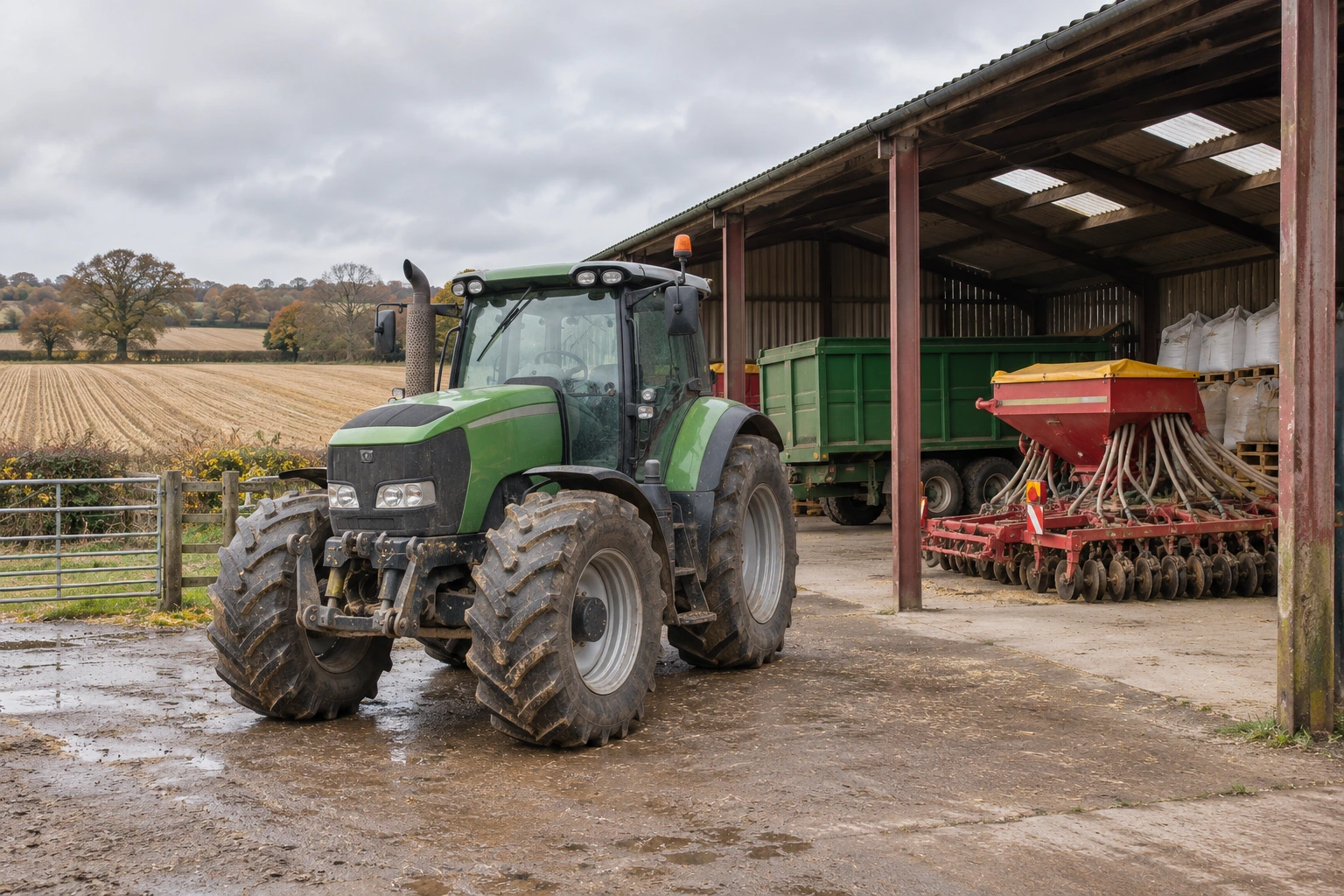
A short season leaves little room for the wrong capacity choice.
Compare buying, sharing or contracting capacity against the work window and cash available. Start with the farm-machinery example, then choose the operating model that fits your business.
Timing matters as much as capacity. Inputs, labour and equipment may need to be paid for before output is sold or receipts arrive. A decision that improves one operation can still constrain cash, people or equipment elsewhere in the business. Compare the whole operating cycle, including a difficult season, before committing.
Which change is worth considering for your business?
Match machinery to the work window
Would ownership, sharing, hiring or a contractor deliver the required work with a more resilient cash position?
Compare practical capacity, reliability, whole-life cost, labour and the effect of delays. Include keeping or repairing existing equipment where useful.
Prepare for the seasonal cash low point
When do input and operating payments fall relative to reliable receipts?
Build a dated cash view and stress delayed receipts, a weaker season and additional repair costs. Keep a chosen reserve visible.
Test a change in the operating model
Does extra output create useful contribution after the additional costs and commitments?
Consider labour, access, storage, logistics and market demand alongside physical capacity. A smaller change or a decision to defer can be valid.
Plan succession or an ownership change
What should the future business support, and how do ownership, management and cash commitments change over time?
Separate the objectives of the owners and operators from the proposed transaction. Map responsibilities, timing, continuity and affordable commitments before choosing a capital route. Legal, tax, valuation and succession advice may be needed; the hub does not provide it or presume that a transfer or sale is the right decision.
PERSPECTIVES AND PRACTICAL TOOLS
Compare the options before committing time or money.
The guides remain in Perspectives. Read their worked examples, source dates and scope before applying the analysis to your own business.
Choose the operating model that fits your situation. These distinctions guide the questions, rather than establish funding eligibility.
Arable and crop farming
Compare work windows, field capacity, storage and the cash cycle from inputs to crop receipts. Machinery ownership is one operating choice, not the whole sector.
Which tasks have the narrowest workable window?
What capacity remains if equipment fails during the peak period?
Dairy and livestock
Continuous husbandry, feed, labour and animal-health needs create a different operating pattern from an arable machinery purchase. Test changes against the full production cycle.
What ongoing feed, labour and husbandry commitments must be sustained?
How do the production and receipt cycles differ from the proposed investment timetable?
Horticulture
Consider crop cycles, labour, energy, storage and perishability together. Protected growing, field production and nursery businesses need different assumptions.
Which crop, energy and labour assumptions drive the cash low point?
What storage or market constraint could reduce the saleable output?
Agricultural contractors
Match equipment and staff availability to customers’ work windows, travel, reliability commitments and payment terms. Utilisation must be supported by deliverable work.
Which work is contracted and which remains a customer forecast?
Can the promised work windows be covered with the actual staff and machines?
Forestry
Separate the long-term woodland investment from the cash needed for the next planting, management or harvesting operation. Saleable timber, access, haulage and contractor availability can constrain receipts even when standing stock has value. Compare the timing and cost of harvesting or processing work with the buyer’s specification and payment terms. Keep replanting, maintenance and other continuing commitments visible after a sale. A woodland owner, harvesting contractor and timber processor have different operating cycles; the arable machinery illustration does not establish their permissions, valuations or financing case.
What permissions, access and contractor commitments need checking?
When can receipts be supported by the actual harvesting and sales plan?
Which maintenance and replanting commitments continue after timber receipts?
Fishing and aquaculture
Distinguish capture fishing from aquaculture before comparing investment. A vessel business needs a realistic view of operating days, maintenance, crew, landing arrangements and the price and timing of accepted sales. An aquaculture operation needs a separate production-cycle view covering stock, feed, site capacity and the period before sale. Perishability, processing and transport can constrain the value of additional output in either model. Test interruptions to production and delayed receipts alongside equipment commitments. Permissions, technical viability and environmental or stock assumptions require evidence specific to the operation; a farm machinery example cannot establish them.
Which operating permissions and production constraints apply to this activity?
What evidence supports the route to market and the timing of receipts?
What operating cash is still needed if landing, harvest or customer receipts are delayed?
Coverage and scope
This hub maps the wider sector. The detailed published guide currently addresses an arable machinery decision. It does not establish equivalent evidence, funding eligibility or service readiness for livestock, horticulture, forestry, fisheries or every business model. Specialist technical, legal and operational advice may also be needed.
Geography: UK-led commercial framing. Each cited source has its own jurisdiction and activity limits; other markets require separate assessment.
The linked sources support the operating context and planning method. The commercial comparisons are GIC Capital analysis, not a forecast, a technical recommendation or evidence of funding availability.
Farm financial planning. Templates and examples are illustrative, not universal performance targets. Checked 9 November 2026.
When to review: Review when the operating model, customer or supplier terms, permissions, costs or relevant official guidance changes.
Hub reviewed 9 November 2026. The linked guides retain their own evidence dates. This is general commercial guidance, not an offer, eligibility assessment or technical recommendation.
Tell us what you want to achieve and what is getting in the way.
GIC can help clarify the commercial objective, compare operating and capital options, and identify the evidence needed for a useful next conversation. Strategic advisory, investment planning and a defined capital requirement are different starting points. Scope, responsibilities and any fees are agreed for the particular engagement.
Tell GIC what is happening, the outcome you need and what you have already tried. Review the context you choose to include; it does not establish a funding requirement or authorise an introduction. Reading this page does not send an enquiry or establish an intention to borrow.