
Manufacturing/8 min read
Should you add a shift, subcontract or invest in equipment?
Compare the output each option can deliver, its costs and its cash needs. Test lower demand before taking on another fixed commitment.
Perspective · GIC Capital · Published 7 November 2026
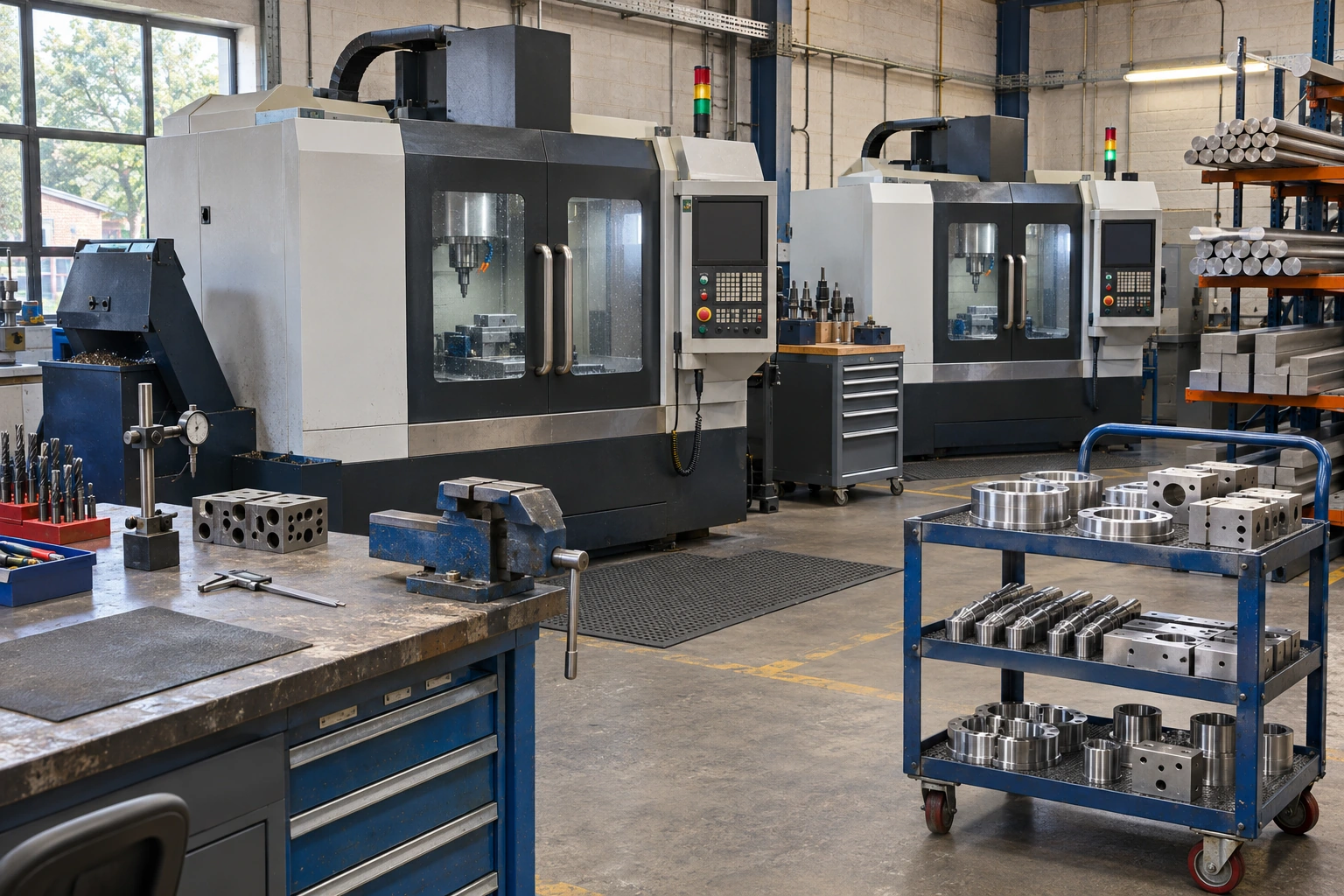
A new order can turn a capacity question into an equipment quotation too quickly. For manufacturers, the useful starting point is the operation restricting reliable, saleable output. An additional shift, a qualified subcontractor and new equipment create different costs, delivery risks and cash commitments. This Perspective compares them using one consistent demand case, then halves demand to show why the preferred option can change.
Find the constraint before increasing capacity
Map the route from order acceptance to customer-approved delivery. For the next twelve weeks, identify the operation that limits saleable output: machining, finishing, inspection, specialist labour, bought-in components or dispatch. Measure good units per available hour at that operation, including changeovers, downtime and rejected output.
A second machine creates little additional delivery capacity if inspection remains the constraint. Another shift may move the problem to maintenance coverage or material availability. Outsourcing a process can release internal hours, but only if specifications, quality approval and logistics work within the customer’s timetable.
Separate contracted demand, repeat orders and unconfirmed pipeline. Record cancellation rights and delivery windows. A customer’s annual forecast and a non-cancellable purchase order deserve different confidence labels. Test the proposed investment against both the evidenced demand and a lower-volume case; do not fill the new capacity with assumed sales simply to improve the answer.
Measure the cost of unreliability as well as nominal speed. Rework, customer returns, overtime recovery and a delayed dispatch can consume the apparent saving from a faster process. Use good output accepted by the customer as the common denominator. An option that produces more pieces but no more accepted deliveries has not solved the commercial constraint.
Compare the same customer-approved output
The following is a hypothetical example, not a client case. A manufacturer can sell 2,400 additional good units over twelve production months at £250 each. Existing rent and head-office costs remain unchanged. The options below are assumed capable of producing the same approved units once operational. Figures exclude VAT, tax, financing, changes in working capital and any equipment resale value.
| Incremental measure | Additional shift | Subcontract | New equipment |
|---|---|---|---|
| Revenue: 2,400 × £250 | £600,000 | £600,000 | £600,000 |
| Variable cost per good unit | £160 | £195 | £130 |
| Total variable cost | £384,000 | £468,000 | £312,000 |
| Contribution after variable costs | £216,000 | £132,000 | £288,000 |
| Additional annual committed operating costs | £60,000 | £12,000 | £30,000 |
| One-off setup and training cash | £12,000 | £4,000 | £10,000 |
| Surplus after setup, before equipment purchase and working-capital changes | £144,000 | £116,000 | £248,000 |
| Equipment purchase and installation | £0 | £0 | £180,000 |
| First-production-year surplus after equipment purchase, before working-capital changes | £144,000 | £116,000 | £68,000 |
The shift’s £160 unit cost includes direct inputs, incremental labour and energy. Its £60,000 commitment covers additional supervision and shift support. The subcontract price includes the supplied materials, transport and inspection attributable to those units. The machine’s unit cost includes direct inputs, operating labour, energy and normal scrap; its separate annual cost covers additional support and maintenance. These definitions prevent counting labour or maintenance twice.
Equipment produces the highest recurring operating surplus here, but the lowest first-year surplus after its purchase. Depreciation is not deducted in this cash comparison. An accounting profit comparison would include an appropriate depreciation charge; cash forecasting would show actual purchase payments and any separate borrowing flows.
Read the answer across the commitment period
Before setup and capital purchase, the shift contributes £156,000 a year and equipment £258,000. The recurring difference is £102,000. Equipment requires £178,000 more upfront than the shift: £180,000 purchase plus £10,000 setup, less the shift’s £12,000 setup. Simple incremental payback is therefore about 1.75 production years, assuming the same volumes and costs persist.
That is a screening calculation. It ignores discounting, working capital, financing, residual value and implementation delays. Use dated cash flows over the expected decision life before approving a substantial commitment. A two-year customer forecast with cancellation rights is not equivalent to two years of guaranteed contribution.
Now halve demand to 1,200 units while retaining the quoted unit costs and committed annual support costs. The first-year surpluses after setup and equipment purchase become £36,000 for the shift, £50,000 for subcontracting and minus £76,000 for equipment. The flexible option performs better in that case. If shift costs can actually be reduced when demand falls, model the timing and cost of that reduction rather than treating all costs as permanently fixed.
Put readiness and cash beside the cost table
Suppose, purely for this example, that a qualified subcontractor could start in two weeks, a staffed shift in four and the equipment in twelve. An order requiring approved deliveries in week four cannot be met by equipment alone. A bridge arrangement might be sensible, but its cost belongs in the investment case. Include installation downtime, trial production, operator training, inspection approval and the ramp to reliable good output.
HSE’s work-equipment guidance covers suitability, maintenance, inspection and adequate information, instruction and training. [1] The commercial implication is straightforward: installation is not the same as production readiness. Have the operations owner confirm the acceptance conditions and implementation budget.
Cash needs another view. Suppose the shift ties up £50,000 of receivables and £16,000 of stock, offset by £15,000 of supplier credit: £51,000 of net operating working capital. The equipment option holds £50,000 receivables plus £13,000 stock less £15,000 supplier credit: £48,000. An outsourced option paid one month in advance could tie up £39,000 of prepayments plus £50,000 of receivables: £89,000. These are hypothetical steady-state balances, not calculated peak funding requirements. Add setup and capital-payment dates to a weekly cash forecast to find the actual low point.
Complete the decision worksheet
| Decision field | Completed example | What to establish in your business |
|---|---|---|
| Demand basis | 2,400 additional good units over twelve months | Signed orders, cancellations, concentration and repeatability |
| Binding constraint | Assumed machining capacity | Measured hours and downstream capacity |
| Delivery acceptance | Customer-approved specification | Trial batch, traceability and rejection responsibility |
| Commercial comparison | Shift £144,000; outsource £116,000; equipment £68,000 first-year cash surplus | Comparable costs and decision horizon |
| Lower-demand test | 1,200 units makes outsourcing strongest on the stated first-year measure | Volume, price, scrap and downtime together |
| Cash evidence | Working-capital balances identified separately | Weekly purchase, wage, supplier and customer dates |
| Next decision | Verify committed demand and readiness before choosing | Owner, evidence required and decision date |
Also test a combined downside: slower sales, higher input prices and a delayed production start. Changing one percentage at a time can miss the difficult case where several pressures occur together. Show which inputs are quotations, measured actuals or estimates, and assign an owner to the assumptions most capable of changing the decision.
What to establish in the next seven days
In the next seven days, reconcile accepted orders to delivery requirements and measure the constraint using actual records. Obtain genuinely comparable shift, subcontract and equipment proposals, including readiness, quality responsibilities and exit costs. Name the owner of each unconfirmed input and the evidence needed before commitment. Over the following weeks, complete the dated cash forecast and combined downside, then decide whether to commit, stage or buy time. An unresolved customer approval or unavailable specialist should remain visible as a decision condition.
Operational changes may reduce the requirement first: smaller batches, fewer changeovers, better scheduling, maintenance that prevents avoidable downtime, revised customer delivery patterns or a qualified subcontracting trial. Count their implementation costs and prove the output improvement rather than assuming it.
If capital is still useful, the requirement is now clearer: what asset or cash gap it supports, how long the commitment lasts, and what operating cash must service it. The ability to obtain finance should not substitute for demonstrating the demand and delivery economics.
Complete the decision worksheet with the evidence, payment dates and operational limit that could change your choice. Record who will check the least certain assumption and when the options will be reviewed.
Set a review trigger before the order is placed
Record what would reopen the decision: a material customer cancellation, a failed trial batch, a longer installation window, lower measured output or an unavailable inspection resource. Set thresholds using the company’s actual obligations, not a universal utilisation target. Compare forecast and actual good units, contribution and cash after implementation. If demand does not arrive, use the agreed exit or staging option while it is still available rather than adding unsupported sales to defend the original choice.
APPLY THE METHOD
Bring the example to your decision
Compare options that can deliver the same customer-approved good output. Record timing, quality, support costs and cash separately. Example values are hypothetical.
Download: Manufacturing capacity decision worksheetOpen the cash-flow plannerBuild your own decision brief
Keep your notes while this website remains open and download a copy when useful. Reloading or closing the page clears them. No contact details are needed and these notes are not sent to GIC Capital.
Sources and scope
Evidence checked on 2026-11-07. Market context and guidance can change. All worked business examples are hypothetical.
Which capacity option remains workable if demand is lower than expected?
Use the example to identify what you would need to check in your own business. If a material question remains, outline it for GIC. Your note stays in this tab until you review and choose to send an enquiry. Any engagement or introduction would be agreed separately.
The finder locates published material, not personalised advice.
General educational analysis. Figures are assumptions, not a valuation, personal recommendation, offer or eligibility assessment. Obtain appropriate specialist input before committing.