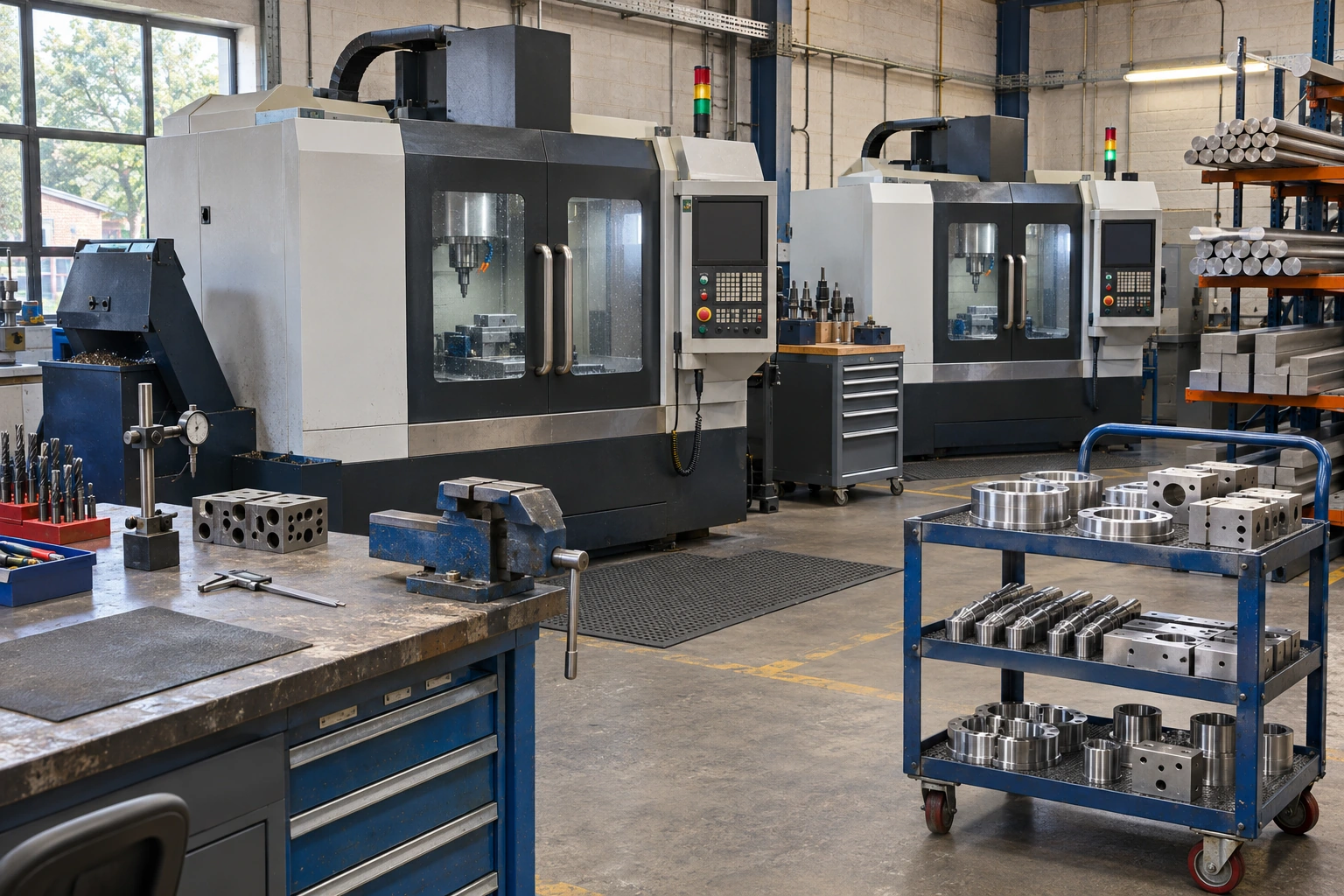
Could you meet more demand without buying more equipment?
Compare another shift, subcontracting and equipment investment to identify the output, cost and cash trade-offs before committing.
A machine's rated speed is only one part of saleable production. Materials, changeovers, staff, inspection, rework and dispatch can each limit the output customers accept. Compare an extra shift, subcontracting, process improvement and equipment investment on the same product mix, quality basis and commitment period. Track deposits, raw materials, work in progress and finished stock through to customer payment. A cheaper unit cost at full utilisation may leave a weaker business if the order volume, readiness date or cash capacity is uncertain.
Which change is worth considering for your business?
Compare the same accepted output
Would another shift, a subcontractor or equipment deliver the required output on a comparable basis?
Use the same product mix, quality and due dates. Include extra supervision, setup, scrap, transport and inspection, and keep fixed commitments separate from costs that change with volume.
Prove readiness before counting capacity
What must be ready before the new operation can produce saleable goods?
Schedule installation, safe use, trained staff, tooling, utilities and customer approval. Include disruption to the existing operation and an evidenced ramp-up instead of assuming full output on delivery day.
Release cash from the production cycle
Where does money remain tied up between the supplier payment and customer receipt?
Reconcile raw materials, work in progress and finished stock. Compare batch size, procurement timing, payment terms and order acceptance without assuming that lower inventory is safe for every process.
Test the lower-volume commitment
Does the option still make sense if demand arrives later or below plan?
Compare whole-life commitments, minimum subcontract volumes, idle equipment, maintenance and exit costs. Retain an option to stage or defer if the customer evidence cannot support a permanent increase.
PERSPECTIVES AND PRACTICAL TOOLS
Compare the options before committing time or money.
The guides remain in Perspectives. Read their worked examples, source dates and scope before applying the analysis to your own business.
Choose the operating model that fits your situation. These distinctions guide the questions, rather than establish funding eligibility.
Discrete production and engineering
For components, assemblies and engineered products, follow orders through each work centre rather than averaging the entire factory. Examine setup time, batch size, tool availability, skilled labour and inspection as well as machining or assembly time. Extra capacity at an unconstrained step may increase work in progress without improving on-time dispatch. Compare subcontracting, shift changes and equipment against customer-approved output, including qualification, transport and rework. Where the business makes to order, connect materials and labour commitments to the specific order's cancellation, acceptance and payment terms.
Which work centre limits completed, accepted orders?
Have tooling, staffing and inspection capacity been included in the option?
What happens to cash if an order is cancelled or acceptance is delayed?
Process production
For batch or continuous processes, reconcile input quantity and quality with useful output, by-products, losses and disposal. Compare changes over a realistic operating campaign, including start-up, cleaning, changeovers, energy and downtime. A faster stage may be of little use if storage or the next process cannot accept its output. Review product mix as well as total volume: a longer run may reduce changeovers but tie cash up in slower-selling stock. Keep technical controls and any required permissions within the feasible operating plan rather than treating them as optional costs.
What yield and run length are supported by representative operating records?
Does the comparison include cleaning, energy, waste and downstream storage?
How much extra stock is created before the changed production schedule becomes cash?
Food manufacturing
Food production adds shelf life, traceability, food-safety controls and customer specifications to the capacity decision. Compare useful saleable output after cleaning, product changes, quality checks, storage and distribution requirements. A larger batch can reduce some setup costs while increasing exposure to expiry, forecast error or returns. Separate customer forecasts from committed orders, and test the cash effect of an ingredient purchase before assuming the finished product will sell. Any investment or process change needs review within the business's food-safety arrangements by the responsible people; this hub does not assess product safety or certification.
Can the planned output be produced, released and sold within its relevant shelf life?
What cleaning, traceability, quality and storage requirements change with the plan?
Who carries the cost of forecast changes, rejection or unused ingredients?
Contract production
Contract manufacturing can use discrete or process methods, but the customer agreement changes the investment risk. Identify who owns tooling and materials, who approves changes, and which volumes are firm rather than forecast. Compare the period of guaranteed work with equipment, employment and premises commitments. A large customer's qualification process may delay receipts even when the plant is ready. Model the consequences of a programme ending early, unused dedicated inventory and disputed quality. A concentration risk or weak commitment may favour staged capacity over a lower quoted unit cost at assumed full volume.
Which minimum volumes and cancellation payments are actually agreed?
Who owns and pays for dedicated tooling and unused stock?
Does the commitment remain workable if the main customer delays or reduces the programme?
Coverage and scope
The detailed guide compares a shift, subcontracting and equipment through a hypothetical manufacturing decision. This hub extends the questions to process, food and contract production, but it does not supply validated yields, sector cost benchmarks, technical certification or customer qualification. These models can overlap; choose the production and contract features that actually apply. No provider readiness, eligibility or realised operating improvement is implied.
Geography: General commercial questions. HSE work-equipment context is for Great Britain. The cited food-safety guidance applies to England, Northern Ireland and Wales; other markets require their own product and operating checks.
HSE guidance supports keeping equipment suitability, safe use, maintenance and competence within readiness. Food Standards Agency guidance supports food-safety management, traceability and review of changed processes. The option comparisons and working-capital questions are GIC analysis, not claims that those authorities endorse an investment or specify commercial performance.
Great Britain work-equipment guidance; supports operational readiness and safe-use boundaries. It does not certify a particular machine or installation. Checked 9 November 2026.
England, Northern Ireland and Wales. Food-safety procedures, traceability and review context; not a product approval, shelf-life assessment or complete regulatory checklist. Checked 9 November 2026.
When to review: Review when product mix, customer approval, order commitments, input prices, yields, staffing, equipment condition or implementation dates change. Recheck applicable machinery and food-safety guidance before using it for a new process, site or jurisdiction.
Hub reviewed 9 November 2026. The linked guides retain their own evidence dates. This is general commercial guidance, not an offer, eligibility assessment or technical recommendation.
Tell us what you want to achieve and what is getting in the way.
GIC can help compare the commercial alternatives, clarify investment assumptions and connect a production decision to the business's cash and capital plan. Bring the customer requirement, constraint and option costs rather than beginning with an equipment funding product. Process design, machinery safety, food safety and product approval remain specialist responsibilities. Any engagement and capital-related work requires an agreed scope and evidence of fit.
Tell GIC what is happening, the outcome you need and what you have already tried. Review the context you choose to include; it does not establish a funding requirement or authorise an introduction. Reading this page does not send an enquiry or establish an intention to borrow.