
Mining and quarrying/9 min read
Will more quarry output mean more profitable customer sales?
Compare accepted product, transport and restoration costs to see whether extra processing capacity could improve earnings rather than just increase tonnes.
Perspective · GIC Capital · Published 7 November 2026
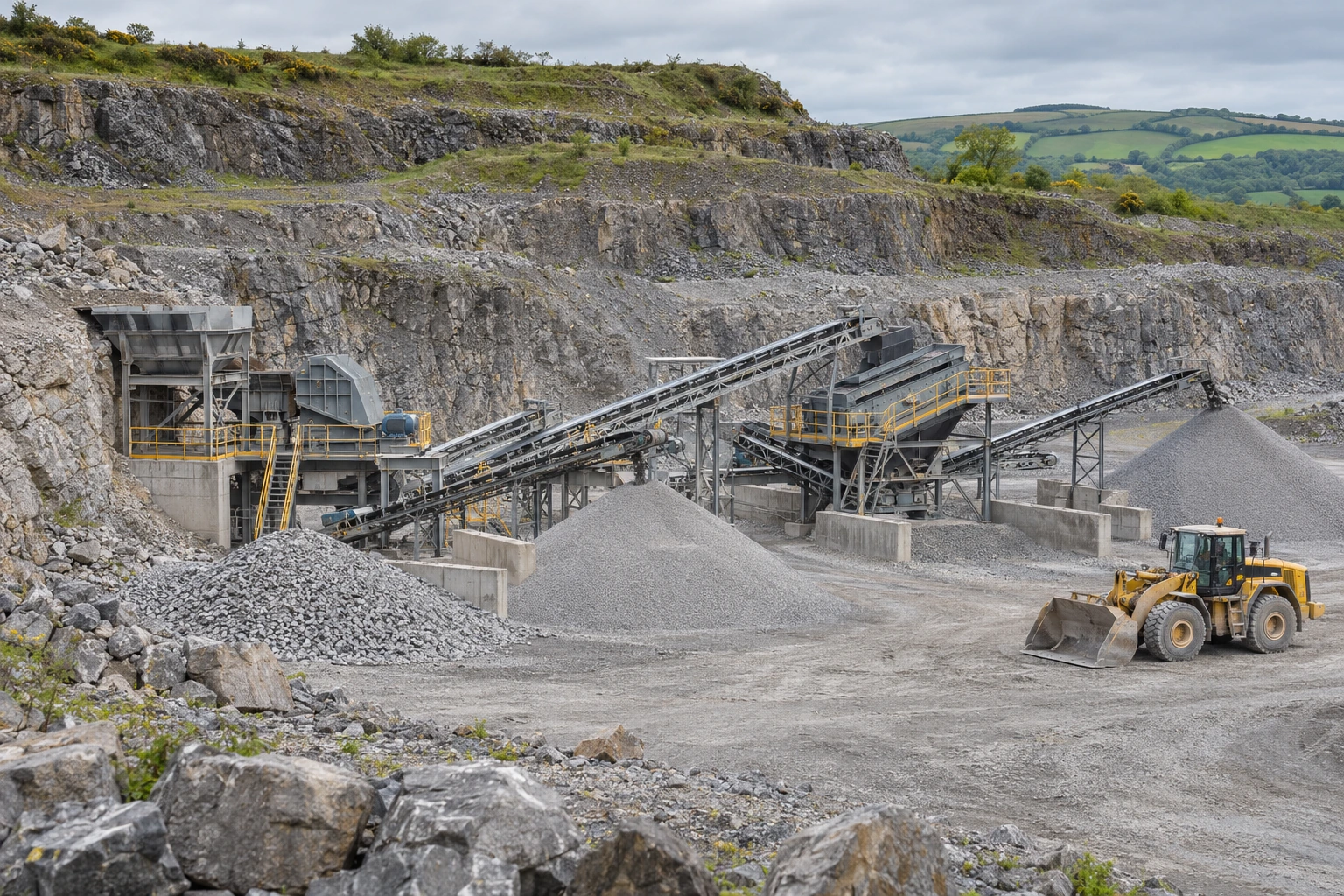
For owners and commercial managers of aggregates and quarry businesses evaluating mobile plant, an additional shift or a larger customer commitment. The opportunity may look straightforward: more material can pass through the plant. The decision is harder when yield, specification, delivery and collection determine what that material earns. Useful capacity is safe, permitted capacity that produces accepted output for a credible market. Start with the bottleneck between the face and the customer, then follow the physical tonnes and cash separately. A new machine can increase output while reducing contribution or building unsold stock.
Map the physical chain before buying throughput
Record the process from extraction and stock movement through crushing, screening, washing where relevant, storage, weighing and delivery. Identify the actual constraint with observed downtime, queues and product shortages. A crusher that can produce more feed tonnes is of limited value if the screen, wash water, haulage, permitted operating hours or customer demand caps accepted sales.
Use a product balance. For each input tonne, estimate the quantities reaching each saleable grade, lower-value stock, rework and residue. Check moisture and measurement conventions so intake, production and weighbridge figures can be reconciled. Separate expected output from tested output and accepted customer orders. A nominal yield shown in a trial does not establish a reliable commercial yield across changing feed conditions.
Choose the period before comparing options. A six-week call-off may support short hire but not a permanent investment that needs years of dependable demand. For a purchase, extend the model across maintenance, idle periods, replacement and disposal, and assess the value of keeping cash available for other commitments.
Define the operating envelope first
Safety and site design determine which alternatives are feasible. HSE guidance addresses quarry duties and the role of clear tipping and excavation rules, informed by geotechnical design. [1][2] A commercial model must respect that operating envelope. It cannot justify overloading, unsafe stockpiling, inadequate inspection, incompatible equipment or a change that qualified site staff have not accepted.
Confirm permissions, hours, traffic conditions, water requirements and the effect of the proposed plant layout with the responsible specialists. Record maintenance, skilled labour and segregation requirements in the timetable. If a safe operating condition or permission is unresolved, treat the affected output as conditional. A model should show what can be delivered now and what depends on a future decision, rather than silently combining the two.
A six-week hypothetical screening commitment
Assume an additional six-week opportunity requires processing 12,000 feed tonnes. The expected saleable, customer-accepted yield is 75%, giving 9,000 paid tonnes. The illustrative delivered selling price is £18 per accepted tonne. Incremental extraction and processing cost is £10 per feed tonne, with delivery at £3 per accepted tonne and mobile plant hire of £18,000 for the period.
The £10 assumption includes the declared incremental energy, wear, labour, royalty, applicable levy and restoration allowance. It is not a statement of actual rates or their legal basis. Check every applicable cost against the site and transaction. All figures are hypothetical, exclusive of VAT and before tax, financing and unchanged central overhead. Restoration allowance in contribution is separated from the eventual cash payment.
| Six-week result | Base: 75% monetised yield | Sensitivity: 85%, with buyers for all output |
|---|---|---|
| Feed tonnes | 12,000 | 12,000 |
| Accepted and paid tonnes | 9,000 | 10,200 |
| Revenue at £18/accepted tonne | £162,000 | £183,600 |
| Extraction/processing at £10/feed tonne | £120,000 | £120,000 |
| Delivery at £3/accepted tonne | £27,000 | £30,600 |
| Added plant hire | £18,000 | £18,000 |
| Incremental contribution | −£3,000 | £15,000 |
The base opportunity loses £3,000 before unchanged overhead despite adding 9,000 accepted tonnes. The higher-yield result only applies if customers buy all 10,200 tonnes on the stated terms. If demand stays at 9,000 tonnes, additional production is stock, not additional revenue. Its handling, storage, working capital and eventual disposal or sale need their own treatment.
Find the boundary that matters
Each accepted tonne contributes £15 after the £3 delivery cost, before feed processing and hire. The period therefore requires £138,000 ÷ £15 = 9,200 accepted tonnes to cover the £120,000 processing and £18,000 hire commitments. That is 76.67% of the 12,000 feed tonnes. Call it a monetised yield boundary: material that passes a screen but is not accepted and sold does not count.
At a £17 delivered selling price, the contribution after delivery falls to £14 per accepted tonne. Covering the same £138,000 requires about 9,857 tonnes, or 82.14% of feed. Alternatively, suppose all 9,000 base tonnes have been delivered but only 90%, or 8,100 tonnes, are accepted and paid at £18. Outbound delivery still costs £27,000, so contribution falls to minus £19,200 before any additional return transport, rehandling or disposal. This combines an acceptance problem with the processing and delivery costs already committed.
Do not extrapolate a constant unit cost through a step change. More hours may trigger additional labour, maintenance or hire, while a different grade can change yield and specification costs. Quote delivered and ex-works sales on a comparable basis. Where the customer provides haulage, remove only costs genuinely avoided and examine the effect on collection timing and site congestion.
Examine the contract and product mix
Confirm the specification, testing, rejection process, measurement basis, loading responsibilities and who bears return transport. A higher invoice price can be less valuable if it exposes the operator to extensive rework or delayed acceptance. Break the customer requirement into grades and dates so the production plan does not create a pile of one grade while the customer needs another.
Ask what the opportunity displaces. If the added order consumes plant time or stock needed for an existing higher-contribution customer, the lost contribution belongs in the comparison. If spare plant time is genuinely available, allocate unchanged costs consistently without inventing a cash saving. Keep strategic relationship benefits explicit and evidenced rather than using them as an unexplained plug.
Follow cash beyond the weighbridge
Put hire deposits, wages, fuel, repairs, transport and customer collection dates into a dated forecast. An accepted delivery is not a cleared receipt. A plausible invoice dispute or delayed payment can leave the business funding an extra cycle of extraction and processing. Reconcile opening stock and work in progress so production cost is neither omitted nor charged twice.
Restoration and aftercare require a separate schedule of commitments. England’s minerals guidance addresses responsibility and consideration of restoration through the site lifecycle. [3] Use the actual permission and cost evidence. A per-tonne provision may help attribute economic cost, but it does not ensure that cash will be available when work is due. Avoid treating receipts held for future obligations as freely deployable investment funds.
Where capital could support a viable opportunity, compare net proceeds and repayments against the expected receipts and downside. Consider shorter hire, staged customer call-offs, changed specifications or declining marginal volume before assuming that owning more plant solves the problem. Capital cannot turn unsaleable output into a sound order.
The next seven days: reconcile one opportunity
- Select one proposed order and reconcile its feed, grade mix, accepted tonnes and customer dates.
- Obtain comparable hire, operating and delivery terms, including likely step costs.
- Have responsible site staff confirm the safe and permitted operating envelope.
- Calculate the monetised yield and price boundaries, then test rejection and collection delays.
- Assign evidence owners and a decision date before hiring plant or committing output.
Refresh the case when feed quality, customer specification, plant availability, haulage, permission or restoration evidence changes. Agree a trigger for pausing additional commitments when accepted output or collection falls behind plan. The aim is a repeatable decision that respects both the quarry and its customers, not a one-off maximum tonnage record.
APPLY THE METHOD
Bring the example to your decision
Reconcile feed tonnes to accepted sales and compare capacity options with specification, transport and restoration commitments visible.
Download: Quarry output, contribution and cash worksheetBuild your own decision brief
Keep your notes while this website remains open and download a copy when useful. Reloading or closing the page clears them. No contact details are needed and these notes are not sent to GIC Capital.
Sources and scope
Evidence checked on 2026-11-07. Market context and guidance can change. All worked business examples are hypothetical.
- [1] Health and Safety Executive, Health and safety at quarries: Approved Code of Practice and guidance. Second edition, 2013. Checked 7 November 2026. General guidance; site-specific engineering and competent advice remain necessary. External source opens in a new tab
- [2] Health and Safety Executive, Tips and excavation. Publication date not stated. Checked 7 November 2026. Do not derive site dimensions or working instructions from this commercial article. External source opens in a new tab
- [3] Ministry of Housing, Communities and Local Government, Minerals planning practice guidance: restoration and aftercare. Published 17 October 2014; relevant paragraphs carry individual revision dates. Checked 7 November 2026. Planning practice guidance relates to England; exact permission, conditions and obligations are site-specific. External source opens in a new tab
Which constraint prevents accepted output from becoming paid sales?
Use the example to identify what you would need to check in your own business. If a material question remains, outline it for GIC. Your note stays in this tab until you review and choose to send an enquiry. Any engagement or introduction would be agreed separately.
The finder locates published material, not personalised advice.
General educational analysis. Figures are assumptions, not a valuation, personal recommendation, offer or eligibility assessment. Obtain appropriate specialist input before committing.