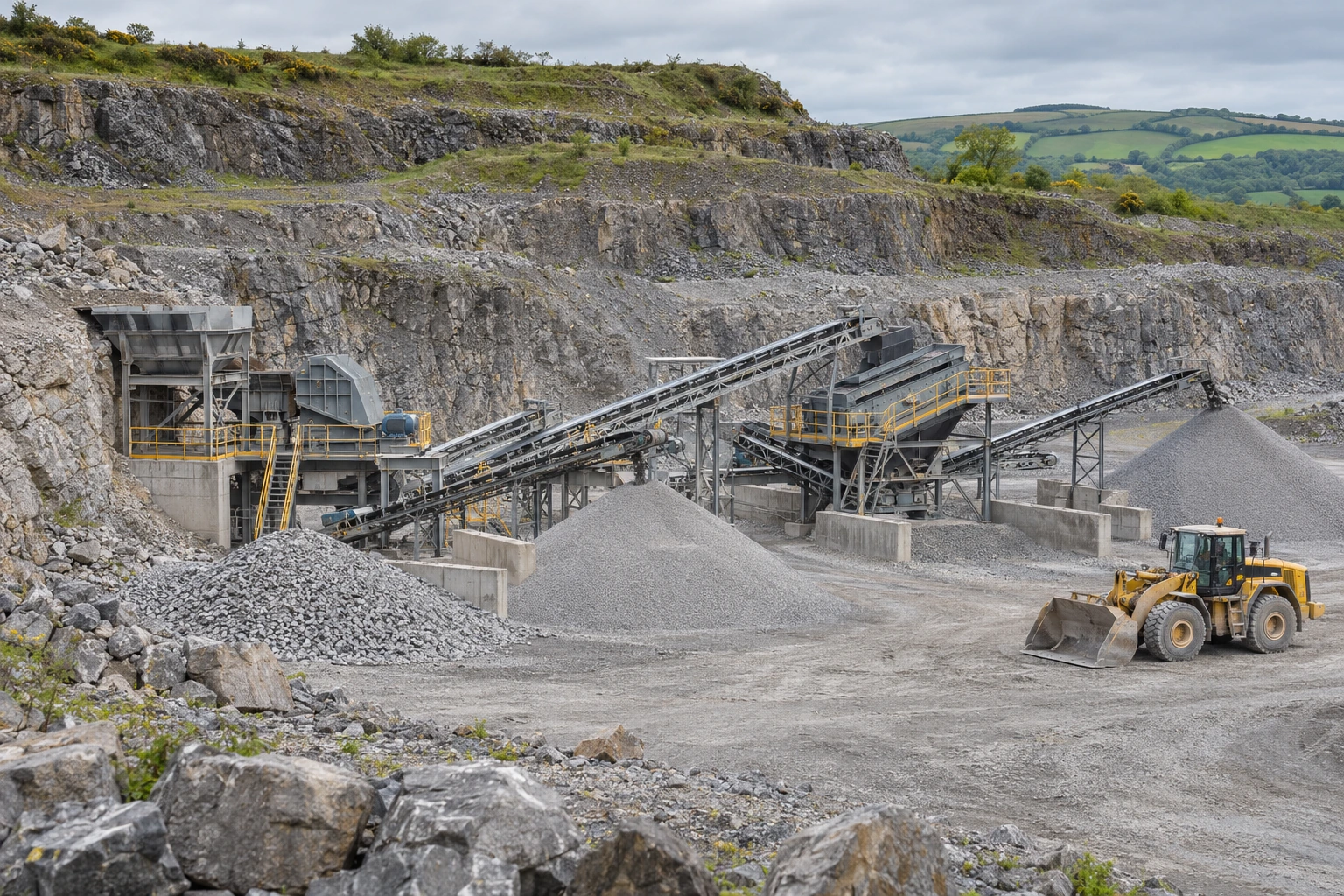
More material processed does not always mean more paid sales.
Compare accepted output, product mix, transport and restoration commitments before adding capacity. The quarry example shows what the investment would need to earn.
Feed tonnes, saleable tonnes and collected revenue measure different things. Start with the material balance from extraction through processing, stock, dispatch and customer acceptance. Compare the contribution after changed operating, handling and transport costs, then place customer receipts beside plant payments and site commitments. A larger operation can create more unsold stock or earlier cash demands. Permissions, safe working limits, restoration and aftercare must remain part of the decision, even when their costs fall after the proposed production period.
Which change is worth considering for your business?
Choose capacity that produces accepted sales
Which constraint prevents the business from delivering the products customers will pay for?
Compare operating changes, repair, short hire and new equipment against the same accepted output. Include downstream handling and transport limits rather than valuing every additional feed tonne as revenue.
Test the product and offtake mix
Does the proposed order improve contribution after specification, rejection and delivery exposure?
Separate grades, prices, acceptance terms and payment dates. Show what happens if a lower-value grade accumulates or the customer takes less than the production plan assumes.
Keep site obligations in the cash plan
What cash must remain available for restoration, aftercare and existing operating commitments?
Distinguish an economic allowance in the unit cost from the date the work must be paid for. Use actual site obligations and specialist cost evidence; a provision does not make cash available.
Stage an uncertain expansion
What evidence would justify the next commitment, and what can wait?
Set decision gates for representative processing trials, permissions, customer acceptance and infrastructure. Compare a smaller stage or deferral with committing to a complete expansion before those dependencies are resolved.
PERSPECTIVES AND PRACTICAL TOOLS
Compare the options before committing time or money.
The guides remain in Perspectives. Read their worked examples, source dates and scope before applying the analysis to your own business.
Compare accepted product, transport and restoration costs to see whether extra processing capacity could improve earnings rather than just increase tonnes.
Choose the operating model that fits your situation. These distinctions guide the questions, rather than establish funding eligibility.
Aggregates quarrying
For sand, gravel and crushed-rock operations, build the comparison around the grades customers will accept and when they will collect or receive them. Extra crushing capacity may simply move the constraint to screening, washing, loading or haulage. Reconcile feed, saleable grades, unsold material and residue on the same measurement basis. Compare a short hire or changed production sequence with permanent plant investment, and keep the extraction plan, permitted operating conditions and restoration timetable visible. The published quarry guide develops this type of decision; its hypothetical yield and prices are not operating benchmarks.
Which grade and delivery dates are supported by actual customer requirements?
Does the proposed change improve accepted sales or only move material into stock?
What processing, transport and restoration cash becomes committed before receipts?
Industrial minerals and dimension stone
Start with the particular product specification and processing route rather than transferring an aggregates yield assumption. Grade, consistency, recovery and customer approval may determine which extracted material has value. For dimension stone, distinguish usable blocks and finished output from all material moved; for a processed mineral, reconcile each treatment stage and its saleable result. Include testing, rework, storage and delivery obligations in the commercial comparison. Assess whether an equipment commitment is supported by repeat demand, a single order or an unverified market assumption, and retain a separate restoration and aftercare schedule.
What evidence supports accepted product yield under representative feed conditions?
Who bears testing, rejection and reprocessing costs?
Does the customer commitment last long enough to justify the proposed investment?
Other mining and extraction models
A metallic-mineral, underground or fuel-mineral project requires its own technical and commercial case. Separate exploration, development, operating production and closure rather than assuming that an estimated resource is available output. Establish which independent evidence supports the production plan, processing recovery, infrastructure, permissions and route to market. Examine offtake pricing and acceptance conditions alongside the costs that continue if commissioning or sales are delayed. The quarry illustration cannot establish reserves, feasibility, closure costs or access to capital for these models; an initial discussion should identify the decision and the specialist work still needed.
Which stage is the project at, and which production assumptions remain conditional?
What evidence supports processing recovery and a workable offtake route?
How are development, closure and aftercare obligations separated from operating cash?
Coverage and scope
The detailed published guide covers a hypothetical aggregates-style quarry capacity decision. The other sections distinguish questions for industrial minerals, dimension stone and other extraction models; they are not completed feasibility studies or evidence of specialist mining mandates. No mineral reserves, commodity prices, permitted capacity, available funding or project results are established here. Confirm the applicable jurisdiction and site obligations before using any assumption.
Geography: General commercial questions. Linked quarry safety context is for Great Britain; minerals planning and restoration guidance is for England. Other jurisdictions and extraction models require separate checks.
The official sources support the need to respect quarry design, permissions and restoration obligations. Product balances, contribution comparisons, staged commitments and cash questions are GIC commercial analysis, not source-supplied market forecasts or technical conclusions. The existing article retains its own worked example and evidence dates.
Great Britain quarry safety context. Supports the distinction between nominal capacity and a site-specific safe operating envelope; not a mine design or working instruction. Checked 9 November 2026.
England planning context for extraction, industrial minerals, aggregates, restoration and aftercare. It does not establish a particular permission, resource, cost estimate or commercial feasibility. Checked 9 November 2026.
When to review: Review before a new commitment and when the extraction plan, feed quality, customer specification, accepted yield, haulage, permission, safe working limits or restoration evidence changes. Recheck jurisdiction-specific official guidance before relying on it for a particular site.
Hub reviewed 9 November 2026. The linked guides retain their own evidence dates. This is general commercial guidance, not an offer, eligibility assessment or technical recommendation.
Tell us what you want to achieve and what is getting in the way.
GIC can help frame the commercial decision, compare investment and operating alternatives, and organise the evidence for a defined capital requirement where relevant. The starting point may be saleable output, an offtake contract or the sequence of investment. Geological assessment, mine design, environmental advice and reserve certification require appropriately qualified specialists. Engagement scope, responsibilities and any fees are agreed for the particular situation.
Tell GIC what is happening, the outcome you need and what you have already tried. Review the context you choose to include; it does not establish a funding requirement or authorise an introduction. Reading this page does not send an enquiry or establish an intention to borrow.