
Energy asset operations/9 min read
Is your renewable asset producing the savings or income you expected?
Compare repairs, operating changes and extra capacity using energy saved, saleable output and income collected, so investment addresses the actual constraint.
Perspective · GIC Capital · Published 7 November 2026
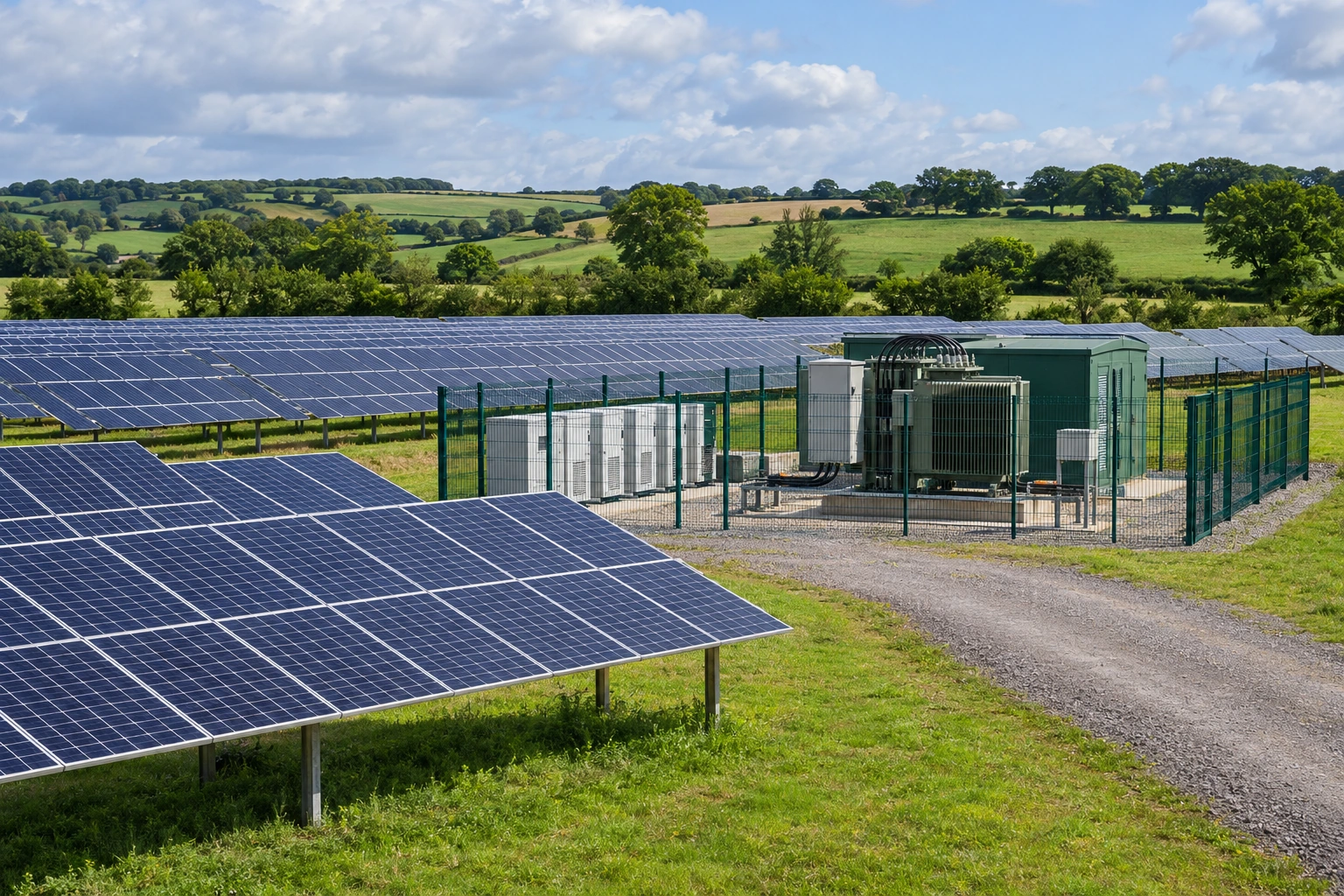
For owners and operators of commercial renewable electricity assets assessing maintenance, performance improvement or additional capacity. A nameplate capacity figure describes equipment, not the cash it generates. Useful output depends on operation, local demand, permitted connection arrangements, metering and the commercial contract. For an on-site asset, some electricity may avoid purchases while the remainder earns export income. Those benefits have different values and timing. Start by reconciling the existing asset before assuming that a larger installation is the next useful investment. This article uses a commercial solar asset to illustrate the method; other technologies need their own operating assumptions.
Reconcile output before diagnosing the investment need
Build a monthly bridge from expected generation to measured generation, usable on-site consumption, exports and losses. Identify downtime, maintenance, metering gaps and any limitation on export. Use qualified technical analysis to distinguish a weather effect from an equipment fault or a measurement problem. A generation shortfall against an old forecast is not sufficient evidence that a particular intervention will recover it.
Align time intervals when comparing generation with site demand. Annual generation of one million kilowatt hours and annual site consumption of one million kilowatt hours do not establish that all generation is used on site. Output may occur when the premises are closed. Check interval data, actual operations and any storage arrangement rather than offsetting two annual totals.
Keep four commercial ledgers
First, record physical generation and export. Second, calculate the electricity purchases genuinely avoided, using the marginal bill components that change. A standing charge that continues is not saved. Third, record export or other energy sale income under the actual contract. Fourth, reconcile statements and bank receipts, including deductions, settlement dates and disputes. These views should connect without being treated as interchangeable.
Ofgem explains the Smart Export Guarantee as an export-payment route for eligible small-scale generators with specified conditions. [1] It is not a universal entitlement for every asset. REGOs evidence eligible renewable generation and serve a different purpose from physical electricity sales. [2][3] Confirm which rights and revenues belong to the owner and which have already been transferred or included in a contract. Do not count a certificate value twice.
Also distinguish accounting profit from cash available for distributions. Deduct actual operating payments and planned lifecycle expenditure on their dates. A management repair reserve may help protect cash, but transferring money into that reserve is not automatically an additional accounting expense. Existing financing, tax, lease commitments and any restricted cash require separate treatment.
A hypothetical performance-recovery choice
Consider an operating commercial solar asset expected to generate 1,000,000 kWh annually before the proposed improvement. Assume 60% is used on site and avoids variable imports at 15p per kWh; 40% is exported at 6p per kWh. Gross annual operating benefit is £90,000 of avoided imports plus £24,000 of export income, or £114,000. This is not £114,000 received from a customer. The distinction matters when forecasting the bank account.
A qualified technical assessment suggests a £30,000 intervention could recover 50,000 kWh per year, with £700 of additional annual servicing. Under the same 60/40 use split, recovered output adds £4,500 of avoided imports and £1,200 of export income. After servicing, the annual operating benefit is £5,000. These are hypothetical, constant-price assumptions, exclusive of VAT and before tax, financing, degradation and discounting; they are not performance guarantees or current energy tariffs.
| Annual incremental result | Base | Downside |
|---|---|---|
| Recovered generation | 50,000 kWh | 20,000 kWh |
| Share used on site | 60% | 30% |
| Avoided variable import cost | £4,500 | £900 |
| Export income at 6p/kWh | £1,200 | £840 |
| Additional annual servicing | £700 | £700 |
| Annual operating benefit | £5,000 | £1,040 |
| Simple payback on £30,000 | 6 years | About 28.85 years |
The downside combines lower recovery and less coincidence with site demand. It is not a forecast of electricity prices or weather. With an assumed eight years of useful service remaining, the base yields £40,000 of undiscounted cumulative benefit before the £30,000 intervention; the downside yields only £8,320. A full appraisal must include the timing of benefits, residual value, risk, taxes and any other changed costs. Simple payback leaves those factors out.
Identify the recovery needed to justify the next step
At the base 60/40 split, each recovered kWh has a weighted benefit of 11.4p before the added servicing. To recover £30,000 over eight years on a simple undiscounted basis, annual operating benefit must be £3,750. Add £700 servicing and divide £4,450 by £0.114: about 39,035 recovered kWh per year. This boundary belongs to the declared example, not an investment hurdle or engineering warranty.
Ask the technical team for evidence of recovery under realistic operation, including planned outage and any interactions with existing equipment. Then identify what must be true commercially: on-site demand, export permission, meter availability and contract terms. A proposal can be technically effective but commercially weak if most extra output earns a lower value than the model assumes.
Test time of recovery as well as annual volume. If the intervention misses the period in which useful output would be greatest, the first-year benefit may be materially smaller. Include downtime caused by the work itself. Where an existing contract is due to expire, use an evidenced renewal case and a separate sensitivity rather than extending today’s rate through the asset’s remaining life by default.
Compare interventions that address the same cause
Set out maintenance, component replacement, monitoring improvement, operational changes and added capacity as distinct options. Confirm the cause each addresses. Expansion does not repair an existing fault; storage does not create generation; moving consumption may change the value of existing output without increasing its volume. Changes to electrical operation require appropriate technical assessment and safe execution.
Consider the property and operating horizon too. A benefit expected over eight years is less useful to an owner with a shorter confirmed tenure unless the rights, access and transfer arrangements support it. Check responsibility for roof or land work, equipment access, insurance, maintenance and decommissioning with the relevant advisers. Do not model an option as deliverable merely because its equipment price is known.
Follow commitments and receipts through implementation
Prepare a dated schedule for deposit, equipment, engineering, planned outage, commissioning and payment. Show avoided import spend through the forecast energy bill, and export receipts through their expected settlement dates. Using the same benefit as both lower operating payments and a separate income receipt would overstate cash. Reconcile meter data, supplier statements and bank payments before relying on an apparent underpayment.
If the commercial case remains useful but the implementation timing creates a cash gap, compare staged work, planned shutdown alignment or capital options against the downside. Show net usable proceeds and repayment commitments, including the effect on other asset obligations. More debt is not evidence that the performance assumption is sound. Retaining optionality can be preferable while recovery evidence is weak.
A seven-day review of the existing asset
- Reconcile twelve months of generation, on-site demand, export statements and bank receipts on consistent periods.
- Identify one performance gap and obtain a qualified diagnosis with a supported recovery range.
- Compare intervention, timing and no-change options using the same technical and commercial horizon.
- Recalculate the boundary with actual import components, export terms, added service costs and remaining life.
- Assign an owner to each unresolved assumption and agree what evidence is needed before committing.
Refresh the decision after a material outage, changed site demand, a contract renewal, a connection change or new technical evidence. Keep the performance baseline so the result of any intervention can be assessed later. The useful outcome is reliable value from the asset, whether the decision is repair, expansion, a smaller operating change or waiting.
APPLY THE METHOD
Bring the example to your decision
Separate generation, useful on-site consumption, export income and actual receipts before comparing interventions.
Download: Renewable asset output-to-value worksheetBuild your own decision brief
Keep your notes while this website remains open and download a copy when useful. Reloading or closing the page clears them. No contact details are needed and these notes are not sent to GIC Capital.
Sources and scope
Evidence checked on 2026-11-07. Market context and guidance can change. All worked business examples are hypothetical.
- [1] Ofgem, Smart Export Guarantee — Generators. Publication date not stated. Checked 7 November 2026. The scheme has technology, location and capacity conditions; it is not a universal revenue route for all energy assets. No tariff in this article is a market quote. External source opens in a new tab
- [2] Ofgem, Renewable Energy Guarantees of Origin. Publication date not stated. Checked 7 November 2026. Accreditation, ownership and contract allocation must be checked. No certificate price or income forecast is supplied. External source opens in a new tab
- [3] Ofgem, REGO — Electricity suppliers and generators. Publication date not stated. Checked 7 November 2026. Applies to the named scheme; individual asset arrangements and other support schemes require separate verification. External source opens in a new tab
Could repairs or operating changes release value before another capacity investment?
Use the example to identify what you would need to check in your own business. If a material question remains, outline it for GIC. Your note stays in this tab until you review and choose to send an enquiry. Any engagement or introduction would be agreed separately.
The finder locates published material, not personalised advice.
General educational analysis. Figures are assumptions, not a valuation, personal recommendation, offer or eligibility assessment. Obtain appropriate specialist input before committing.