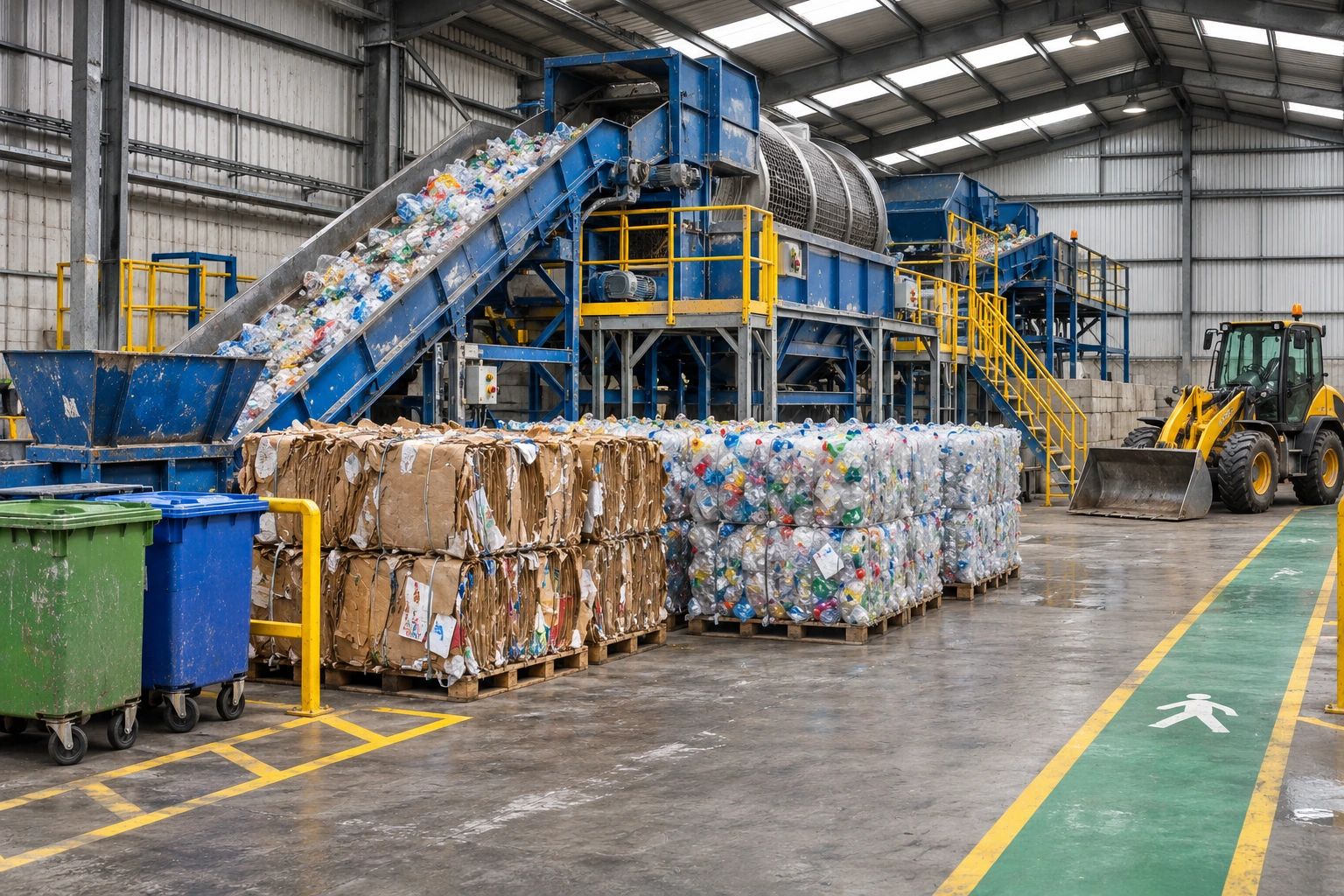
Does extra volume leave enough after treatment and residue costs?
Compare the income and full operating costs of the next contract to identify where more work could strengthen earnings or consume cash.
Water services and waste operations should not be evaluated through one throughput measure. Identify what the customer pays for, what must be delivered, and the full route from intake to an acceptable outcome. For a material stream, reconcile recovered output, residue and stock with treatment and onward costs. For water and sewerage, connect service capacity, maintenance and asset renewal to the actual responsibilities and receipts. Extra volume can increase obligations before it creates useful contribution, particularly where quality, permissions, outlets or collection timing remain uncertain.
Which change is worth considering for your business?
Price the complete service obligation
What remains after the costs of delivery, treatment and the final destination?
Follow all material and service commitments, including rejected output and stock still awaiting treatment. Compare net contribution on the same basis rather than treating gross intake revenue as available margin.
Verify the operating route before expanding
Can the proposed flow be handled safely, lawfully and within actual downstream capacity?
Confirm responsibilities, permission conditions and the intended outlet with the responsible specialists. Keep proposed variations and unconfirmed destinations conditional in the plan.
Compare improvement with new capacity
Would better separation, scheduling or reliability address the constraint more effectively?
Use representative operating evidence to compare the existing process with the proposed change. Include implementation downtime, changed energy and labour use, residual costs and the quality customers will accept.
Protect cash against unresolved obligations
What cash is required if the normal treatment, outlet or receipt timetable is interrupted?
Model an interruption alongside the stock and service work that remains. Test the full cost and timing of a verified alternative route; an early receipt must not conceal the cost of completing the contract.
PERSPECTIVES AND PRACTICAL TOOLS
Compare the options before committing time or money.
The guides remain in Perspectives. Read their worked examples, source dates and scope before applying the analysis to your own business.
Choose the operating model that fits your situation. These distinctions guide the questions, rather than establish funding eligibility.
Water supply and services
Start by identifying the business's role: owning or operating supply assets, providing treatment or maintenance, or delivering another contracted water service. Those roles have different revenue rights and delivery obligations. Compare capacity changes with demand evidence, operating reliability, energy, maintenance and the renewal of assets already in service. A capital project also needs an implementation plan that respects continuity of service. Record the applicable permissions, service standards and specialist responsibilities rather than borrowing assumptions from a recycling example. The current detailed content does not provide a water tariff model or a utility regulatory assessment.
Which asset and service responsibilities belong to this business?
What demand and contract evidence supports the proposed capacity?
How will maintenance, renewal and service continuity be funded during the change?
Sewerage and wastewater treatment
Establish the flow and characteristics the operation must handle, the required treatment outcome and the lawful discharge or onward route. Compare a proposed contract or asset change against practical capacity, operating costs, monitoring, maintenance and residual handling. Do not assume that spare hydraulic capacity establishes spare treatment capacity for a different input. Separate a routine operation from a new or varied activity requiring further evidence. In England, the cited discharge guidance explains when an environmental permit may be needed; it cannot determine the permission or technical suitability of a particular site.
Does the proposed input fit the treatment and permission evidence?
What monitoring, residual handling and maintenance costs change?
What happens if treatment, discharge or collection is interrupted?
Waste collection and transfer
Compare the revenue from a customer or route with collections, vehicle time, handling and the cost of a verified destination. Volume alone can hide an inefficient service pattern or a costly material mix. Establish who classifies the material, what the contract permits the operator to reject, and how contamination or extra collections are treated. Map payments to transport and receiving sites against customer receipts. A transfer operation also needs a stock and onward-capacity plan; taking more material does not create a viable route if lawful outlets cannot accept it on workable terms.
What does each route contribute after transport and receiving-site costs?
Which contamination, rejection and extra-service terms are agreed?
Are onward capacity and payment dates supported by current arrangements?
Waste treatment and disposal
Assess each stream against the treatment route, permitted activities and costs required to complete the obligation. Separate intake receipts from earned economic value where material still needs costly treatment or removal. Include labour, energy, consumables, testing, residual disposal and changed storage or equipment commitments. Stress a different input composition and an interruption to the intended route, not just a lower sale price. The site-specific permission, competence and environmental position need responsible specialist review. A positive cash balance from early gate-fee receipts is not proof that the remaining treatment obligations are affordable.
What work and cost remain after the intake payment arrives?
How does the result change with different composition or treatment downtime?
Is there a verified lawful alternative route, with its full net cost?
Recycling and resource recovery
Follow a representative batch from intake through recovered grades, rejected material, residue and remaining stock. Combine gate fees, accepted output value, processing, transport and disposal costs on a consistent weight basis. Better recovery is useful only if the output meets a specification and has a credible destination. Before buying sorting capacity, test the change with representative material and realistic outlet terms. Keep waste status and any end-of-waste assessment separate from the price a buyer offers. The published recycling guide provides a hypothetical contribution comparison, not a legal determination or market price forecast.
What accepted output and residue are evidenced by representative batches?
Are prices, quality terms and outlet capacity verified for each grade?
Does the investment still work if yield and selling price weaken together?
Coverage and scope
The detailed guide addresses recycling and resource-recovery contribution. Water supply, sewerage, collection and other treatment sections provide distinct decision frameworks, but there are no dedicated published worked cases for those models here. No utility tariff, regulatory return, waste classification, permit entitlement or environmental performance is established. Guidance is geographically limited and the actual operator, site, stream and destination must be checked.
Geography: General commercial questions. The cited environmental-permit, discharge and material-status guidance applies to England. The waste duty-of-care code covers England and Wales. Other jurisdictions and water-service regimes require separate evidence.
Official sources support permission, material-status, duty-of-care and discharge boundaries. They do not validate a site's throughput, treatment performance, outlet or profitability. Contribution, service-obligation and cash comparisons are GIC analysis; no new price, levy rate or regulatory outcome is asserted.
England and Wales. Responsibilities for waste holders and transfers; actual roles, classification and destination require verification. Checked 9 November 2026.
England. Waste, by-product and end-of-waste context; a sale or stated recovery value is not a determination of material status. Checked 9 November 2026.
England. When discharge activities may need a permit and the operator's application route; no site-specific discharge consent or treatment design is supplied. Checked 9 November 2026.
When to review: Review when input quality, service scope, recovery, outlet terms, disposal costs, stock, operating permissions or discharge conditions change. Recheck official guidance for the actual site and jurisdiction before a changed activity or investment commitment.
Hub reviewed 9 November 2026. The linked guides retain their own evidence dates. This is general commercial guidance, not an offer, eligibility assessment or technical recommendation.
Tell us what you want to achieve and what is getting in the way.
GIC can help organise the commercial comparison, connect service and asset decisions to cash, and define the evidence needed for an investment or capital conversation. The business model, route and responsibilities come before a finance product. Water engineering, waste classification, discharge decisions, environmental compliance and technical permissions require appropriate specialists. Service fit, scope and any fees must be established for the particular engagement.
Tell GIC what is happening, the outcome you need and what you have already tried. Review the context you choose to include; it does not establish a funding requirement or authorise an introduction. Reading this page does not send an enquiry or establish an intention to borrow.